
Ahmedabad Travel Guide | India's First World Heritage City
Ahmedabad was the first city in India to be named a World Heritage City in its entirety, and almost no Australian tourist has heard of it. That gap is the whole reason to come, and the dry-state rules are the thing to read before you do.
The city nobody told you about
Here is a fact that ought to be better known: the walled city of Ahmedabad was inscribed as India's first World Heritage City, the whole historic urban fabric of it, not a single monument.
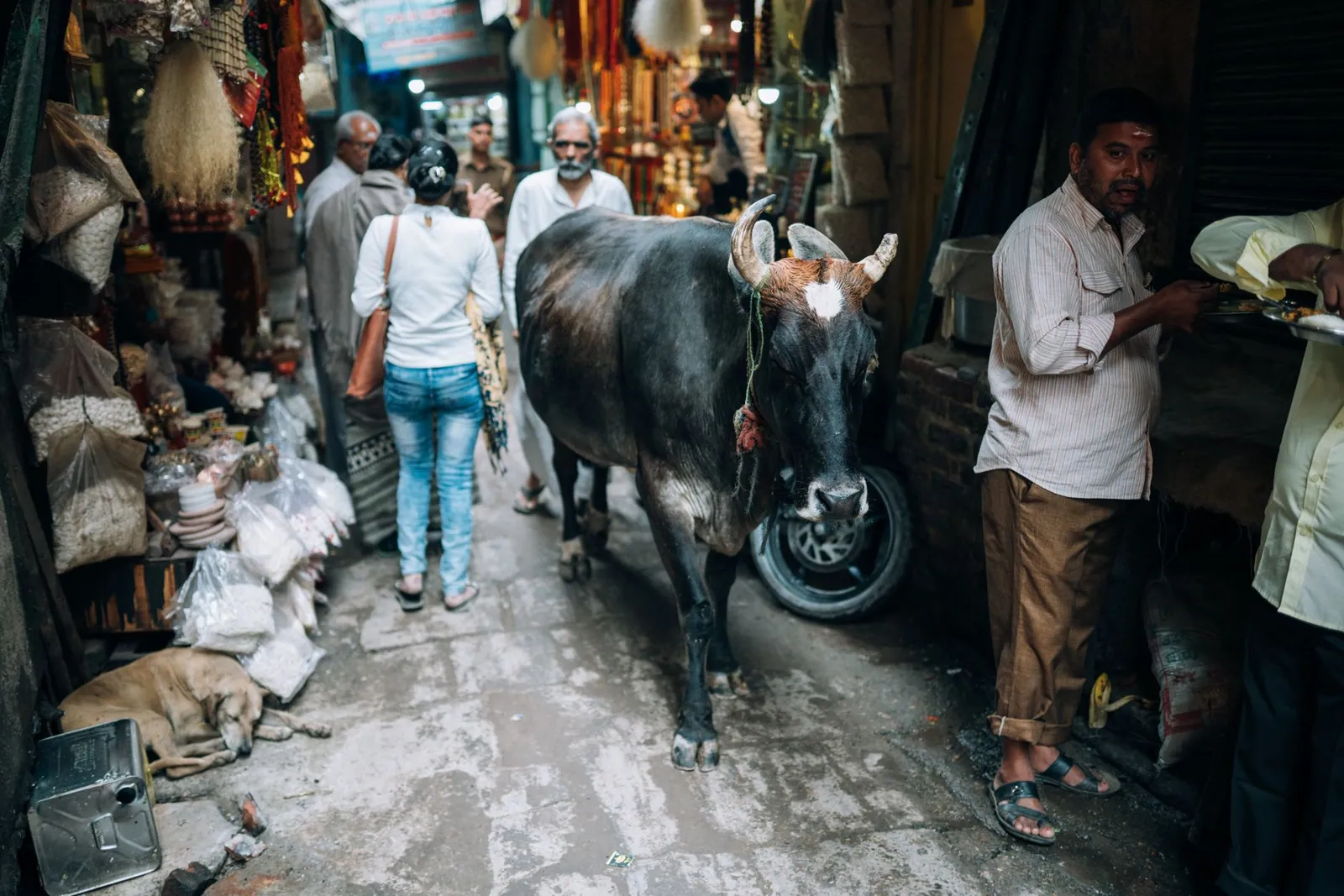
And almost no Australian goes. Ahmedabad appears on our flight searches constantly, because Gujarat has a large and well-established community here and people fly to see family. It almost never appears on holiday itineraries. Which means that unlike Jaipur or Agra, you will experience it as a working city with six hundred years of layers rather than as a place arranged for visitors.
That is either the point or the problem, depending on the traveller. If you want polished heritage tourism with a clear path through it, Rajasthan does that better. If you want an Indian city that is still entirely itself, this is the one. Ask us about Ahmedabad fares.
Read this before you pack: Gujarat is dry
Prohibition has been in force in this state for a very long time, and it is not a formality.
Alcohol is not sold openly, restaurants do not serve it, and you cannot simply bring it in from another state and assume nobody minds. Visitors from outside Gujarat can generally obtain a permit, and in practice this is most often arranged through a hotel that holds a licensed facility for exactly this purpose. The rules and the process change, so check the current position rather than trusting any webpage, including this one.
What surprises most visitors is how little it matters once you are there. The city's evening social life runs on food and chai rather than bars, Manek Chowk at eleven at night is busier than any pub you have been to, and a fortnight in Gujarat with no alcohol in it is a genuinely different and rather good experience. But it will ruin your first night if nobody told you, so now you have been told.
The pols are the reason to come
Inside the old walls sits a form of urbanism that exists nowhere else in this shape: the pol.
A pol is a neighbourhood entered through a gateway, houses packed shoulder to shoulder around shared courtyards, organised historically by community and trade. The details are what get you. Carved timber facades that survived because nobody had the money to replace them. Chabutro, communal bird feeders, standing in the courtyards like elegant wooden towers, still filled each morning. Secret passages connecting one pol to the next, built for a time when getting out quickly mattered. Underground water tanks. Shared wells.
Several hundred of them remain, in every condition from beautifully restored to structurally alarming, and people live in all of them.
Walk one early. The organised heritage walk that leaves from a temple in the old city at dawn is the standard way in and it is genuinely good, but the better experience is simply being in those lanes at six in the morning while the milk arrives and the birds are fed and the city has not yet started shouting. It is the quietest an Indian city ever gets.
The things to see, honestly ranked
Sabarmati Ashram is first, and not because of the buildings, which are deliberately plain. Gandhi lived here for years, and the Dandi March, the salt march that helped end an empire, started from this spot. It is a small, simple, spare place beside the river and it does something to people. Free, an hour, and the most affecting site in the city.
The Sidi Saiyyed Mosque is one wall, essentially. But the stone lattice window carved into it, the jali of a tree of life so fine it looks woven rather than cut, is one of the most famous pieces of stonework in India and the emblem of the city. Ten minutes, and worth stopping the car for.
Adalaj Stepwell, a short drive north, is the one that will surprise you most. Indian stepwells are buildings that go down instead of up, and this one descends five storeys into the ground in carved sandstone, cool and dim and octagonal, built so that villagers could reach water in the dry season and sit somewhere bearable while they did it. There is no equivalent anywhere in Australian architecture and photographs do not prepare you.
Manek Chowk is jewellery by day and a street food market by night, and the transformation happens around ten. Go late, eat standing up, and do not plan anything for the following morning.
The Calico Museum of Textiles is remarkable and difficult: entry is by advance arrangement with limited numbers, and it is worth the administrative trouble if textiles interest you at all.
The thali will defeat you
Gujarati food is its own cuisine and it catches people out in a specific way: it is sweeter than the rest of India, deliberately, with jaggery finding its way into dishes an Australian would not expect it in.
The full Gujarati thali is the local event. Unlimited is not a marketing term here; servers circulate and refill anything that empties, indefinitely, and the only way to stop is to physically cover the bowl. First-timers surrender somewhere in the middle and are then brought dessert anyway.
Elsewhere: dhokla, steamed and savoury and better than it sounds; khandvi, rolled and delicate; fafda and jalebi, which is a fried-savoury-and-syrup-sweet combination eaten for breakfast and which makes no sense until it does; and undhiyu, a winter vegetable dish traditionally cooked in a pot buried in the ground, which appears around the kite festival and is worth timing a trip for on its own.
The kite festival is a real reason to plan a trip
Mid-January brings Uttarayan, marking the sun's turn north, and it is the single best day to be in this city.
The whole of Ahmedabad goes up onto its roofs. Not some of it: all of it, families, neighbours, entire streets, from early morning. The sky fills with kites, kite-fighting is a competitive sport conducted with cut lines, and the noise from the rooftops is a city-wide party. After dark the kites give way to paper lanterns and it keeps going.
If you are booking a Gujarat trip and your dates have any flexibility at all, aim at this. Hotels fill and fares rise, so it needs planning rather than luck. Our flights to India page covers the seasonal booking picture across the corridor.
The day trips worth the drive
Rani ki Vav at Patan is a few hours away and it is the stepwell that made stepwells famous, a World Heritage site so celebrated it appears on Indian currency. If Adalaj impressed you, this is the full version.
The Modhera Sun Temple pairs with Patan on the same long day.
The Statue of Unity is roughly four hours away and it is the tallest statue in the world by a considerable margin. Whether that is a reason to spend eight hours in a car is a matter of taste, and we would say honestly: for most visitors, no. For anyone travelling with teenagers, or anyone who enjoys the sheer scale of things, absolutely yes.
When to come, and how to get here
November to February is the season, and it is not close. The Gujarat plains in April, May and June produce some of the most severe heat in inhabited India, and sightseeing simply stops being possible in the middle of the day. The monsoon runs roughly July to September and brings relief along with the usual complications.
Getting here from Australia always involves a stop, most often through a Gulf or Asian hub, and sometimes via Delhi or Mumbai with a domestic leg to finish. There is no non-stop and there is unlikely to be one. Which hub you route through decides what hour you land, and landing at 3am in a city with no tourist infrastructure to catch you is a different experience from landing at 8pm. We check that before quoting, and our Sydney to Ahmedabad and Melbourne to Ahmedabad pages go through the routings in detail.
Around the city, ride-hailing apps work well and remove the fare conversation entirely. The old city is best on foot and genuinely unpleasant by car, so base yourself somewhere you can walk into it from, or accept that you will be parking on the edge and walking in anyway. Get a free Ahmedabad quote.