
Delhi Travel Guide | When to Go, Where to Stay and What to Know
Mughal monuments, chaotic markets, refined dining and the gateway to north India. Delhi rewards travellers who arrive prepared. Here is the preparation.
Getting around, ranked by sanity
The metro wins almost everything: fast, cold, cheap, and the airport express line beats any car at rush hour. Ride apps (Uber and Ola) cover what the metro cannot, with fixed prices that end the haggling era; use them at night without hesitation. Auto-rickshaws are the fun middle option once you insist on the meter or agree the fare first. Cycle rickshaws own Old Delhi's lanes, where nothing with an engine makes progress. What loses: hailing street taxis as a newcomer, driving yourself (do not), and walking long distances between sights that look adjacent on a map but are separated by six lanes of traffic and a flyover. Distances in Delhi deceive; group each day's plan by neighbourhood and let the metro do the stitching.
When to go
Delhi has two personalities. From October to March it is one of the great winter cities: 15 to 25 degrees, garden weather, wedding season sparkle and festivals from Diwali to Republic Day. From April onwards it turns furnace, then monsoon. Australians on school-holiday calendars should target the December to January window and book flights four to six months out, because half of Melbourne and Sydney has the same idea. Lock in a fare quote before you plan anything else.
Where to stay, by neighbourhood
- Connaught Place and central Delhi for first-timers: colonial-era architecture, metro connections everywhere and walking distance to Janpath shopping.
- Aerocity for short stays and onward flights: international hotels five minutes from the airport, sealed off from the traffic.
- South Delhi (Hauz Khas, Greater Kailash, Saket) for return visitors: leafy, calmer, and home to the city's best independent restaurants.
- Old Delhi for the brave and curious: heritage havelis in the middle of the mediaeval city. Unforgettable, and not restful.
Our hand-picked Delhi hotels cover each of these areas across budgets.
What to see and book ahead
The Red Fort, Humayun's Tomb, Qutub Minar and the Lotus Temple anchor any first visit, with Chandni Chowk's food lanes and the Sunday book market for atmosphere. A guided food walk or a sunrise heritage tour is worth booking before you fly rather than negotiating on a footpath; see our top things to do in Delhi for the experiences that consistently earn their price.
Shopping, done strategically
Delhi rewards shoppers who know which market sells what. Dilli Haat for state-by-state crafts at honest prices, Khan Market for books and boutique labels, Janpath for the cheerful haggling apprenticeship, Chandni Chowk's Kinari Bazaar for wedding trims and dupattas, and the Sunday book market for treasure at kilogram prices. Fixed-price government emporiums are the calm option when energy runs out. Whatever you buy, remember the suitcase: our fares include generous allowances, and confirming yours before the shopping spree is cheaper than the airport scale. Check what your fare includes.
The practical bits
- Getting around: the Delhi Metro is superb, air-conditioned and safe; buy a tourist card. For everything else use Uber or Ola rather than street taxis.
- Money: cards work in hotels and malls; markets run on cash and UPI. Carry small notes.
- SIM and data: airport counters issue tourist SIMs quickly, or arrange an eSIM before departure so you land connected.
- Air quality: November to January can be smoggy. Travellers with asthma should pack accordingly and plan outdoor sightseeing for mornings after rain.
- Day trips: Agra's Taj Mahal is two hours by express train. Book the Gatimaan or Vande Bharat trains ahead; do not leave it to the platform. Jaipur works as an overnight rather than a day trip, and together they make the Golden Triangle that most first India itineraries are built on.
A first-timer's three days, hour by honest hour
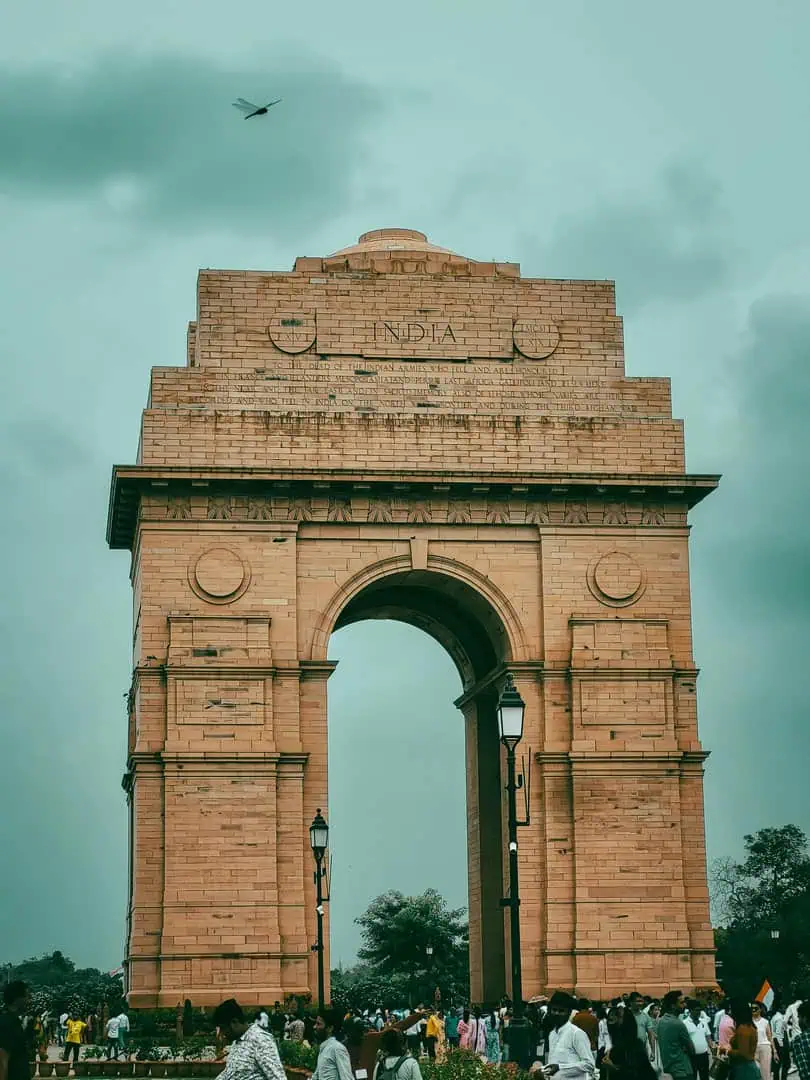
Day one: New Delhi's set pieces. Humayun's Tomb at opening (the light and the parakeets are the reward for the alarm), then Lodhi Gardens for a slow walk among fifteenth-century tombs, lunch and bookshops at Khan Market, and India Gate at dusk when half the city comes out for ice cream. Gentle, green and completely unlike the Delhi of reputation.
Day two: Old Delhi, guided. The Red Fort with the audio guide, then a guided walk through Chandni Chowk's food lanes (see our things to do in Delhi for the walks worth booking), the Jama Masjid from its minaret if your knees allow, and a cycle rickshaw back through the spice market with your eyes watering from chillies and delight equally.
Day three: south and spiritual. Qutub Minar early, the adjoining Mehrauli park that most tourists miss entirely, lunch in Hauz Khas Village, then either Gurudwara Bangla Sahib's astonishing langar kitchen or Akshardham's evening water show depending on your appetite for scale.
Weddings, work or family will bend this shape, but the underlying logic holds: one day of gracious New Delhi, one day of gloriously ungracious Old Delhi, one day going deeper.
What Delhi costs on the ground
Once the flight is paid, Delhi is kind to Australian wallets. The metro crosses the city for small change, a filling street-food meal costs less than a Sydney coffee, and even the grand heritage hotels price their famous lunches at levels that would embarrass a Melbourne bistro. Where money disappears is shopping (Dilli Haat and Khan Market are dangerous in the best way) and private drivers for day trips, which remain excellent value split between a family. Budget qualitatively: street-smart travellers spend little, comfort-first travellers spend moderately, and only the flight and the five-star bed need real planning, which is where a proper fare quote and our Delhi hotel picks earn their keep.
Eating Delhi without regrets
Delhi's food is the city's true monument. The rules that keep it joyful: eat where the queue is local and moving fast, start gently in the first two days while your stomach calibrates, drink bottled or filtered water only, and save the street-side chaat for a guided walk before going solo. Do not leave without butter chicken somewhere old-school in Daryaganj, parathas from the lane that is named after them, biryani in Nizamuddin, and one properly extravagant hotel breakfast to remember the contrast by.
Festivals: when Delhi changes completely
- Diwali (October or November) turns the city into light and firecrackers; magical, busy and the peak of flight demand, so book months ahead.
- Republic Day (26 January) brings the great parade down Kartavya Path and serious security; spectacular if planned, disruptive if stumbled into.
- Holi (February or March) is colour warfare with strangers and best experienced through a hosted event rather than the open street.
- Wedding season (November to February) does not close the city but fills its hotels, its flights and its best venues; travellers adjacent to a wedding should lock everything early.
Getting there from Australia
Delhi is the easiest Indian city to reach from Australia: non-stop from Sydney and Melbourne with Air India, or one comfortable stop with Singapore Airlines, Malaysia Airlines and others from every Australian city. Full-service fares include the baggage you will inevitably fill at Dilli Haat. A quote costs nothing and takes 30 seconds: get your Delhi fare and a consultant will reply within 2 business hours.