
Goa Travel Guide | Beaches, Seasons and the Right Goa for You
Goa is not one holiday but several wearing the same name, a party strip, a family coast, a heritage state and a quiet tropical escape, arranged along a hundred kilometres of Arabian Sea. Choosing the right Goa matters more than choosing Goa, and that is what this guide is for.
First, choose your Goa
The party Goa lives on the northern strip, Baga through Anjuna to Vagator: beach clubs, trance nights that outlived their era into legend, Saturday night markets and a crowd that treats sunrise as a bedtime. It is loud, fun and completely avoidable if that is not the trip.
The boutique Goa hides just behind it, in Assagao and Siolim's lanes: restored Portuguese villas, serious restaurants, yoga studios and cocktail bars in heritage bungalows. This is where the style set actually stays while visiting the party a taxi ride away.
The family Goa runs down the middle and south, Candolim's calmer sands, then the long southern beaches, Colva to Palolem, where resorts spread out, the sea gentles in season and evenings end with grilled fish rather than a DJ.
The quiet Goa sits at the far ends: Morjim and Ashwem in the north (turtle nesting, low-key beach houses) and Agonda and Patnem in the deep south, where hammocks outnumber sunbeds and a week disappears without a plan.
The heritage Goa is inland and non-negotiable for at least a day, whichever coast you choose: the basilicas of Old Goa, Fontainhas' painted Latin quarter in Panaji, and the spice farms of the interior.
Match your party to the paragraph and half the trip's decisions are made. The other half is timing, and that is a table further down.
The beaches, shortlisted by an honest hand
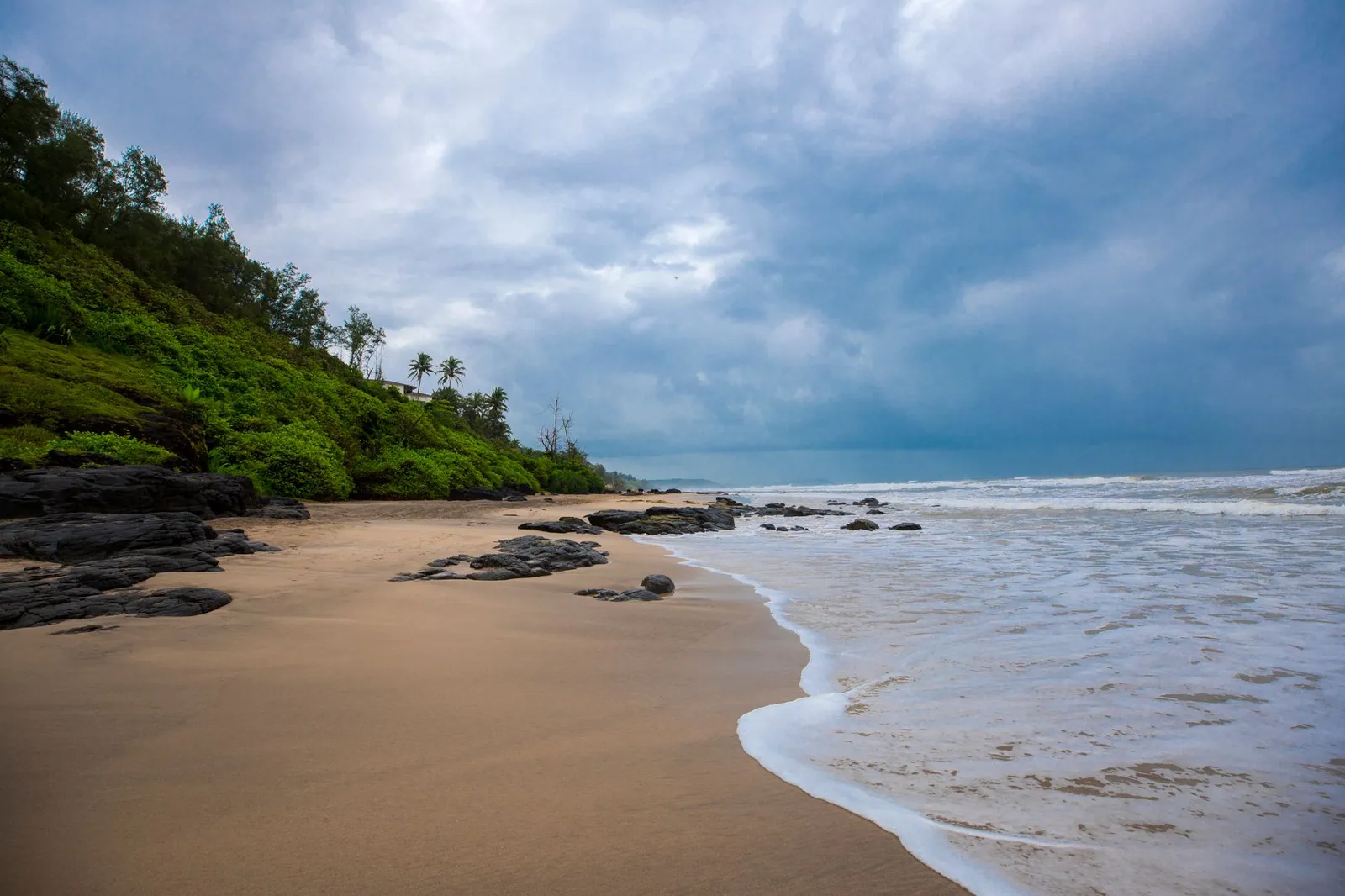
Rather than list all forty, the ones worth choosing on purpose: Palolem, the crescent postcard of the south, kayaks and calm water in season; Agonda, its quieter neighbour, arguably the state's loveliest sand; Ashwem and Morjim, the north's grown-up beaches, wide and wind-kissed; Vagator, red cliffs and fort views above the club scene; Benaulim and Colva's southern reaches, where the resort belt earns its keep; and Butterfly and Kakolem, the boat-trip coves for one adventurous afternoon. Every beach changes character with the season: the sea that lets children paddle in January can be genuinely dangerous in July, and the lifeguard flags are the law worth obeying on this coast.
Beyond the towel: the day and a half that lifts the whole trip
Give one day to the heritage circuit. Old Goa's Basilica of Bom Jesus holds the relics of St Francis Xavier beneath gilded Baroque, and the Sé Cathedral across the road was once Asia's largest church; together they explain the "Rome of the East" era in two unhurried hours. Roll on to Panaji's Fontainhas quarter for streets of ochre, indigo and Portuguese tiles, a bakery stop, and the slow realisation that Goa is a culture, not just a coastline. Day tours cover this circuit with pickup from either coast; the options below list the reliable ones.
Give the half day to a spice plantation in the interior, lunch included and elephants thankfully retired from the good ones, or to a sunset river cruise on the Mandovi, or, between November and February, to a dawn dolphin boat from almost any beach. The state is small; nothing worth doing is more than ninety minutes from anywhere you will sleep.
Eating and drinking, the Goan syllabus
Lunch is the fish thali, a steel tray of fish curry, rice, kokum, vegetables and a fried fish that varies with the morning's boats, served at lunch houses where the locals are your quality control. Dinner rotates the classics: prawn balchão, chicken xacuti, proper Goan vindaloo (vinegar-tang, not scorched-earth), and beach-shack grilled catch chosen from the ice display. The Portuguese thread continues in poi bread, chouriço and bebinca's caramelised layers. Feni, the cashew spirit, arrives with lime and legend; treat the first glass as a cultural obligation and the second as a considered decision. The boutique-belt restaurants of Assagao turn all of this into serious modern dining when the shack rhythm needs a night off.
When to go, told straight
The season switch matters more in Goa than almost anywhere in India. November to February is what the postcards mean: dry days in the low thirties, calm seas, every shack and club open, peak crowds and prices across Christmas and New Year when flights want booking months ahead. October and March deliver almost the same weather with softer prices and thinner crowds, the connoisseur's window. April and May heat up and empty out. June to September is the monsoon: dramatic skies, waterfalls at full thunder (Dudhsagar is at its best), green paddies, deep hotel value, and a swimming ban that is entirely serious. Monsoon Goa is a real holiday, but it is a verandah-and-book holiday, not a beach one.
Where to stay, matched to the Goa you chose
The party crowd bases in Baga-Calangute or Vagator; the boutique set books Assagao and Siolim villas early because there are few and they know it; families anchor in Candolim or the southern resort belt; the peace-seekers go Agonda, Patnem or Ashwem. Everything books out for the Christmas fortnight embarrassingly early, and season-opening rates in November are kinder than January's: compare Goa stays by beach before the coast makes the decision for you.
Getting around a state built for wandering
Goa's geography is friendly and its transport is famously eccentric, so plan accordingly. The scooter is the state's default vehicle and its greatest freedom: rentals are everywhere, distances between beaches are short, and puttering a coastal back road past paddies and whitewashed churches is half the Goan experience. The non-negotiables are a helmet, a licence, sobriety and daylight for your first rides; the hospital-tan of careless tourists is a genuine Goan cliché. Taxis fill the gaps with a local ecosystem all its own: app-based services operate alongside taxi stands with negotiated fares, so agree the price before moving and ask your hotel what the fair number is. Drivers hired by the day make the heritage circuit and airport runs effortless for families.
Two logistics notes worth knowing before you book anything. The state has two rail stations and one main airport axis, and transfer times from the airport to the far southern beaches can run well past an hour, so match your arrival time to your coast. And distances deceive in the other direction too: north and south Goa are only a day trip apart, meaning a southern-serenity base still permits a northern market night, and vice versa. Nobody is trapped by their choice of coast; they are just anchored to the right one.
Getting there from Australia
Goa rides one connection behind the main gateways: through the Asian hubs or via Mumbai and the other Indian metros onto a short domestic sector, ticketed through so a late inbound cannot strand you. The Christmas fortnight and the wedding-season weekends squeeze seats hardest, and the smart pattern pairs Goa with Mumbai or the wider India network on a single itinerary. Fares move daily and are quoted individually: request your Goa fare quote and a consultant replies within 2 business hours with wholesale options and the routing that fits which Goa, and which season, you just chose.