
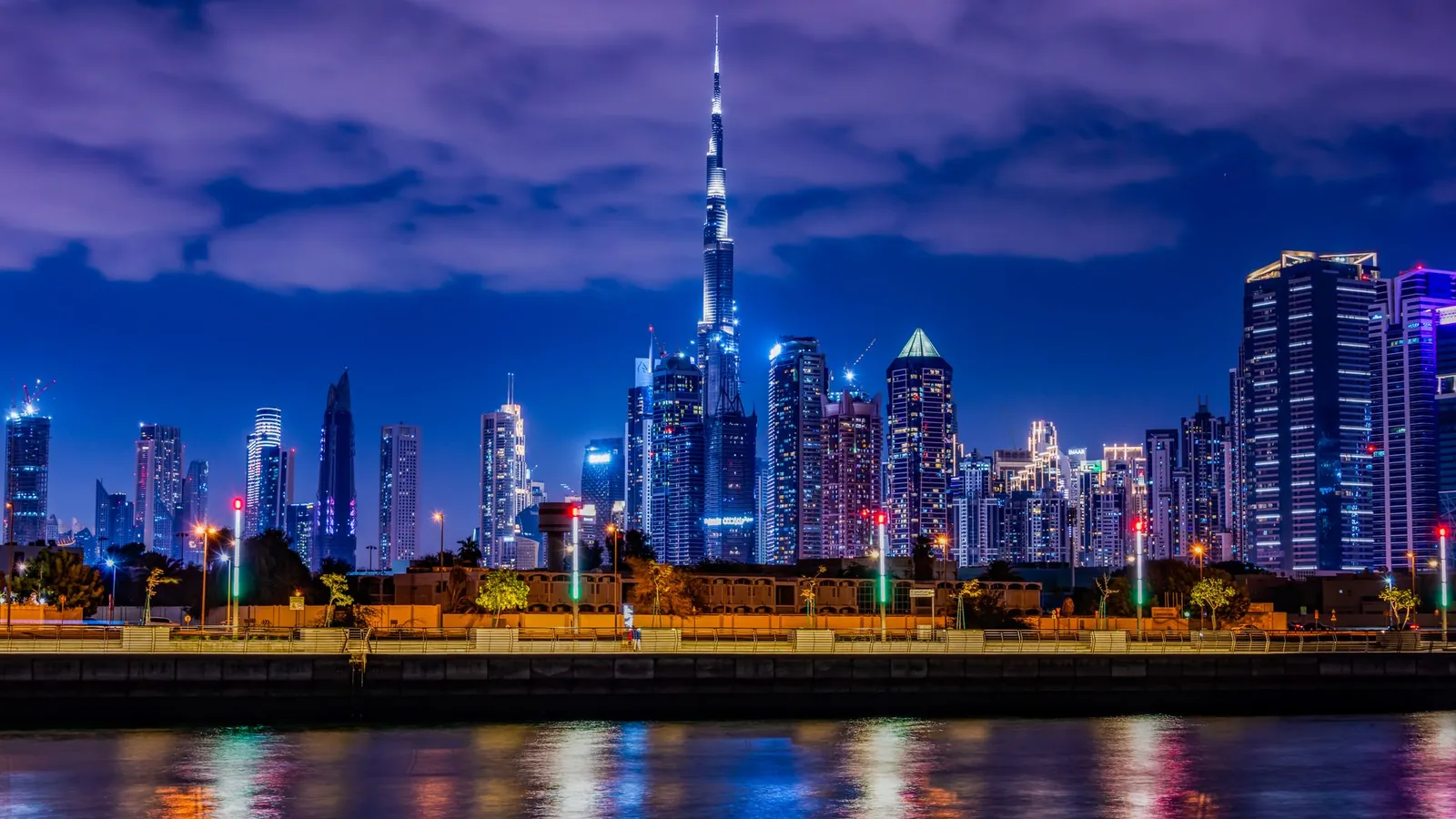
Dubai Travel Guide | The Stopover That Deserves Three Days
Dubai has a reputation as a shopping centre with a beach attached, and the reputation is earned by visitors who only see the new half. The old half, the creek and the souks and the desert behind it, is where the trip actually is.
Cross the creek
Almost every disappointed Dubai visitor made the same mistake. They stayed in the new city, saw a tower and a mall and a manufactured beach, decided the place had no soul, and went home.
They never crossed the creek.
Dubai Creek is the saltwater inlet the whole city started on, and the two banks, Deira and Bur Dubai, hold the version of this place that existed before the oil and still exists now. Wooden dhows tie up along the wharf and load washing machines and tyres for Iran and East Africa exactly as they have for a century. Abras, small wooden ferries, cross the water constantly for a fare so small it is essentially symbolic, and the crossing is the best few minutes in the city.
On the Deira side, the Gold Souk does a genuinely startling volume of business, and the Spice Souk next to it smells the way you hoped it would. On the Bur Dubai side, the Al Fahidi district is a warren of restored coral-and-gypsum houses with wind towers, which are pre-electric air conditioning and which work. There is a coffee museum. There is a place where you sit on the floor and eat with locals.
None of it is spectacular. All of it is real, and it takes one morning. Do it first, before the new city sets your expectations. Ask us about a Dubai stopover.
Dubai works best as a stopover, and we say so
We book a great many Dubai holidays and we will still tell you this: the best use of Dubai for most Australians is two or three nights on the way to somewhere else.
The reasons are structural. It sits at the natural break point of the flight to Europe, which our Sydney to Dubai page goes through in detail. A stopover on a through fare frequently costs little or nothing extra. And three days is genuinely all the city asks for: the creek, the desert, one day of the new city, done.
Stretch it to a ten-day Dubai holiday and most people run out of appetite around day five. Compress it to a three-night stop and it is one of the best-value additions to a trip available anywhere, because it converts fourteen hours of misery into two comfortable flights with a proper hotel and a desert in the middle.
That is not a criticism of the city. It is a recommendation about how to use it.
The desert is the actual reason
If you do one thing here that costs money, do this, and do it properly.
The gap between a good desert trip and a bad one is enormous. The bad one is a convoy of identical four-wheel drives, forty minutes to the nearest dunes, twenty minutes of being thrown around, a photograph with a camel, a buffet under lights with a stage show, and a coach park's worth of people. It is fine. It is also nothing.
The good one goes further out, ideally into one of the conservation reserves, with a smaller vehicle and fewer people. The dune bashing is optional and quite a lot of people would rather skip it. What you are actually there for arrives after dark, when the engines stop: silence of a kind that does not exist in a city, and a sky with genuinely too many stars in it. Falconry demonstrations at the good operators are real rather than theatrical, and a proper Emirati dinner beats a buffet.
Ask for the small evening trip. Pay a little more. It is the difference between a story and a photograph.
The new city, chosen honestly
The Burj Khalifa is worth going up once, and the trick is to book a timed slot around sunset well in advance, because those sell first and the walk-up option is whatever is left. It is very tall and the view is genuinely extraordinary. It is also the most photographed thing in the emirate and you will not be alone.
The Dubai Fountain at the base of it is free, runs every half hour in the evening, and is better than it has any right to be. Watch it from the lake edge rather than a restaurant.
The Dubai Mall is a mall. It is an extremely good mall with an aquarium in it, and if the weather has driven you indoors it will absorb an afternoon painlessly. It is not a reason to fly anywhere.
The Museum of the Future is the one that surprises people. It is a genuinely well-made building and the exhibitions inside are better than the concept suggests. Book ahead, because it sells out.
The beaches are good, public and free, and Kite Beach in particular is a normal, pleasant, unpretentious afternoon.
Old Dubai's Al Seef stretch along the creek is a modern reconstruction of an old district, which sounds terrible and works better than expected, mostly because it is on the water.
The heat is not a detail
November to March is the pleasant season and the expensive one. Everything outdoors functions, the desert is comfortable, the beach is the point, and the city is at its best.
June to September is severe. Not "warm for Australians" severe: genuinely extreme, the kind of heat where outdoor life reorganises itself around dawn and midnight and the middle of the day happens indoors. Australians routinely underestimate this because we consider ourselves qualified on heat, and Dubai in August is a different category of thing.
But the trade is real and worth stating. Fares fall considerably. Hotels become remarkable value. Attractions are empty. And if your trip is a two-night stopover that is mostly indoors, or a resort stay where you move between air conditioning and a pool, the heat matters far less than it would on a walking holiday. We will not sell you a summer walking tour of Dubai. We will happily book you a summer stopover, because it makes sense.
April, May and October are the shoulders and they are the quiet answer: hot but survivable, prices soft, crowds thin.
The practical bits nobody mentions
The metro is excellent and nobody uses it. It is clean, cheap, air-conditioned and it runs along the main spine of the new city. Visitors default to taxis and then complain about the traffic on Sheikh Zayed Road, which is a self-inflicted problem.
Distances are enormous. Dubai is long rather than dense. The creek and the Marina are not a walk apart and nothing is as close as the map suggests.
Dress is more relaxed than people fear and less relaxed than Bali. Beach and pool are normal. In souks, malls, older neighbourhoods and anywhere religious, shoulders and knees covered is the respectful default and costs nothing.
Alcohol is a licensed-venue thing. Available in hotels and their restaurants and bars, not in ordinary shops, and public drunkenness is a legal matter rather than a social one. Behave as you would in a nice hotel and this is a non-issue.
Ramadan changes the city. Daytime eating and drinking in public is restricted, hours shift, and the evenings become extraordinary. It is a fascinating time to visit if you know what you are walking into and a confusing one if you do not.
Getting there, and how to use the airport
There is a non-stop from Sydney at around fourteen hours, which our flights to Dubai page covers along with the one-stop alternatives, and the Emirates airline page goes through the carrier that built the corridor. On a sector that long the cabin question is a real one, and we make the case on our business class Sydney to Dubai page.
One practical note that saves a bad first morning. Flights from Australia commonly arrive in Dubai in the small hours or early morning, and hotel check-in is usually many hours later. Book the room from the night before. It is the cheapest fix to the most common complaint we hear about this city, and it converts a wretched half-day of waiting in a lobby into a shower and a sleep. Get a free Dubai quote.