
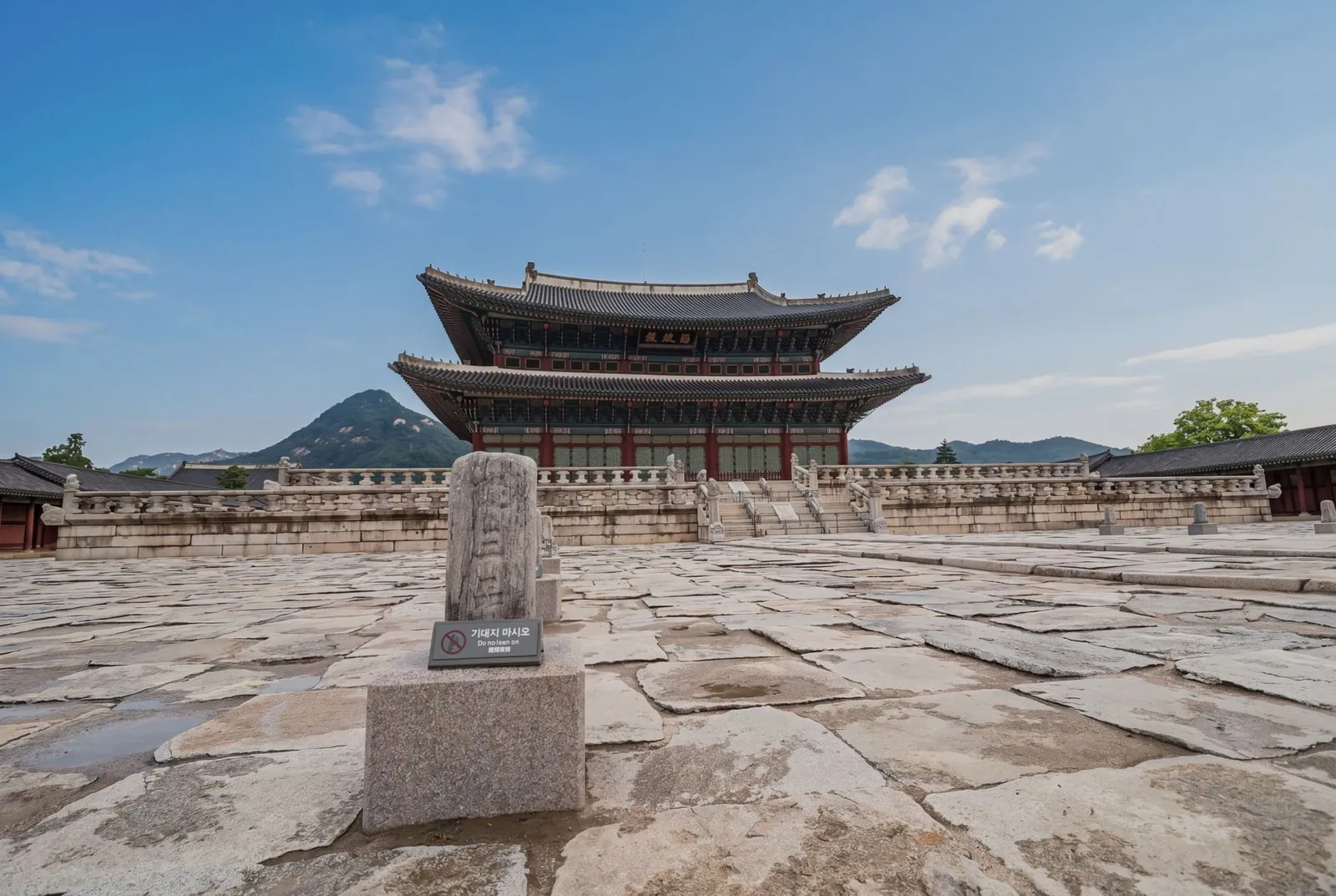
Flights to South Korea from Australia | K-ETA and the Best Airport
Korea has gone from a route we rarely quoted to one we quote weekly, and most of the new travellers are booking it like Japan. It is not Japan, the entry paperwork is different, and the seasons are sharper.
The route that appeared
Five years ago we barely quoted Korea. Now it is weekly, and the change has almost nothing to do with aviation and everything to do with culture: the music, the television, the food, and a generation of Australians who decided they wanted to see where it comes from.
The consequence is a lot of first-time travellers booking Korea as though it were Japan, because Japan is the East Asia they know.
It is not Japan. The paperwork is different, the seasons are sharper, and the country itself is a completely different proposition. Ask us to check your Korea dates.
The entry rule, and why we will not be specific
Korea introduced the K-ETA, an electronic travel authorisation applied for online before departure. It has since suspended the requirement for some nationalities on a temporary and reviewable basis.
That is precisely the kind of arrangement that changes, and being confidently wrong about it would cost you a boarding pass rather than an argument. So we are not going to tell you on this page what applies to you today.
What we will do: check the current position on an official source, close to your travel date, and confirm it for your exact passport when we quote. If your household holds passports from more than one country, every one gets checked separately, because these arrangements are nationality-specific and the answer for an Australian passport is frequently not the answer for the other one in the drawer.
That is ten minutes of work and it is the single most valuable thing on this page.
Incheon is the best airport in the world
This is not a throwaway line. Incheon regularly wins that title in the industry surveys and it genuinely earns it.
It is fast, calm, beautifully signed, and it is a pleasant place to be tired in, which is a thing almost no airport manages. The transfer into Seoul is quick and cheap. If you end up with a long connection there, that is a considerably better problem than it would be at most hubs.
Which raises the obvious point: Korea works well as a stopover on the way to Europe or North America, and almost no Australian considers it. Korean carriers have built the connections, the airport is a genuine pleasure, and Seoul is worth three days on its own. A few nights on a through fare frequently costs little or nothing extra.
Korea is not Japan, and that is the point
Travellers who arrive expecting a variation on Japan are always surprised, so here is the honest comparison.
Japan is quiet, precise, orderly and indirect. Korea is loud, fast, late and direct. People will tell you what they think. The service is warm rather than ceremonial. Nobody is performing restraint.
The food is a different cuisine entirely, and it is spicier and more fermented than Australians expect from the Korean restaurants at home. Kimchi is not a side dish, it is a food group. The barbecue is a social event rather than a meal. And the drinking culture is genuinely formidable.
The nightlife runs later than almost anywhere on earth. Not late in the Australian sense. Late in the sense that the trains stop and the night is still young and you will sort it out at 5am.
The history is heavier. A divided peninsula, a war within living memory, a colonial period before that, and a country that rebuilt itself from very little in a couple of generations. The DMZ tour is one of the strangest and most sobering half-days available anywhere.
Both countries are wonderful. They are not the same trip, and booking one expecting the other is how people come home confused rather than delighted.
The seasons are sharper than you think
This is where Australians get caught, because our mental map of Asia is tropical.
Spring, April to May, is the good window: mild, blossom, comfortable.
Autumn, September to November, is arguably better: clear, crisp, and the colour in the mountains is spectacular.
Summer is hot, very humid, and it is the monsoon. It is not a gentle wet season.
Winter is properly cold. Real snow, real sub-zero, a serious jacket rather than a light one. And it is genuinely excellent if you are dressed for it: the skiing is good, the food makes more sense in the cold, and the fares are at their friendliest.
The point is that Korea has four real seasons in a way that Bali and Bangkok do not, and packing for it as though it were South East Asia is the classic first-timer error.
Learn hangul on the plane
The single best piece of preparation advice for this country, and it takes an evening.
Korean is written in hangul, which is a phonetic alphabet rather than a set of characters. It was designed to be learnable, deliberately, and it is: a couple of hours gets you sounding out words even without knowing what they mean.
That sounds like a party trick and it is not. It means menus, station names, shop signs and bus destinations stop being decorative and start being information. It is the highest-return two hours of preparation available for any destination we sell, and almost nobody does it.
The shape of the trip
Seoul deserves three or four days minimum and rewards more.
Busan is a different city on the coast and it is worth the trip. The high-speed rail between them is fast, cheap and excellent, and it beats flying comfortably. Do not book a domestic flight for that leg.
The DMZ is a half-day from Seoul and it is unlike anything else.
Jeju is the island and it is a proper holiday of its own.
And the open jaw worth asking about is usually not within Korea but with Japan: into Tokyo and home from Seoul, or the reverse, with a short hop between them. Two countries, close together, nothing alike, no backtracking. Our flights to Japan page covers that corridor and our Tokyo travel guide covers the other end.
The airlines and the cabin
The corridor is served by Korean carriers non-stop and by the Asian hubs connecting through, including Singapore Airlines via Changi and Cathay Pacific via Hong Kong, which is worth a stopover of its own.
The alliance note matters here: the Korean carriers sit in SkyTeam and Star Alliance, so if your points live with Qantas they will not travel with you. Cathay is the Oneworld answer.
At around ten hours with almost no time difference, the cabin question is the same as Japan's: you are buying a morning rather than jet lag relief, and premium economy is a genuinely strong answer. Our is business class worth it guide sets out where the line falls.
Send us your dates and every passport in your party: request your free South Korea quote and a consultant replies within 2 business hours with fares in Australian dollars, the Japan open jaw priced alongside if that interests you, and your entry requirement confirmed against the current rules rather than last year's.