
Best Time to Visit Bali | Month by Month, Honestly
Bali has a dry season and a wet season, and Australians treat that like a rule about whether to go. It is not. It is a rule about what kind of holiday you get, and the wet season suits more travellers than admit it.
The rule everyone gets wrong
Bali has a dry season and a wet season. Australians hear that and treat it as a rule about whether to go.
It is not. It is a rule about what kind of holiday you get, and once you understand that, the calendar opens up considerably, because the season most people avoid suits a lot of them better than the one they book.
Here is the honest version, month by month. Ask us to check your Bali dates.
The two seasons, plainly
The dry season, roughly May to September. Reliable sun, lower rainfall, and the weather you booked. It is also the peak, and July in particular is when the entire east coast of Australia arrives simultaneously.
The wet season, roughly October to April. Here is what it actually means: a heavy, dramatic afternoon downpour, and sunshine either side of it. Not a fortnight of grey. Not Melbourne in winter. The rain arrives, does its business for an hour or two, and leaves.
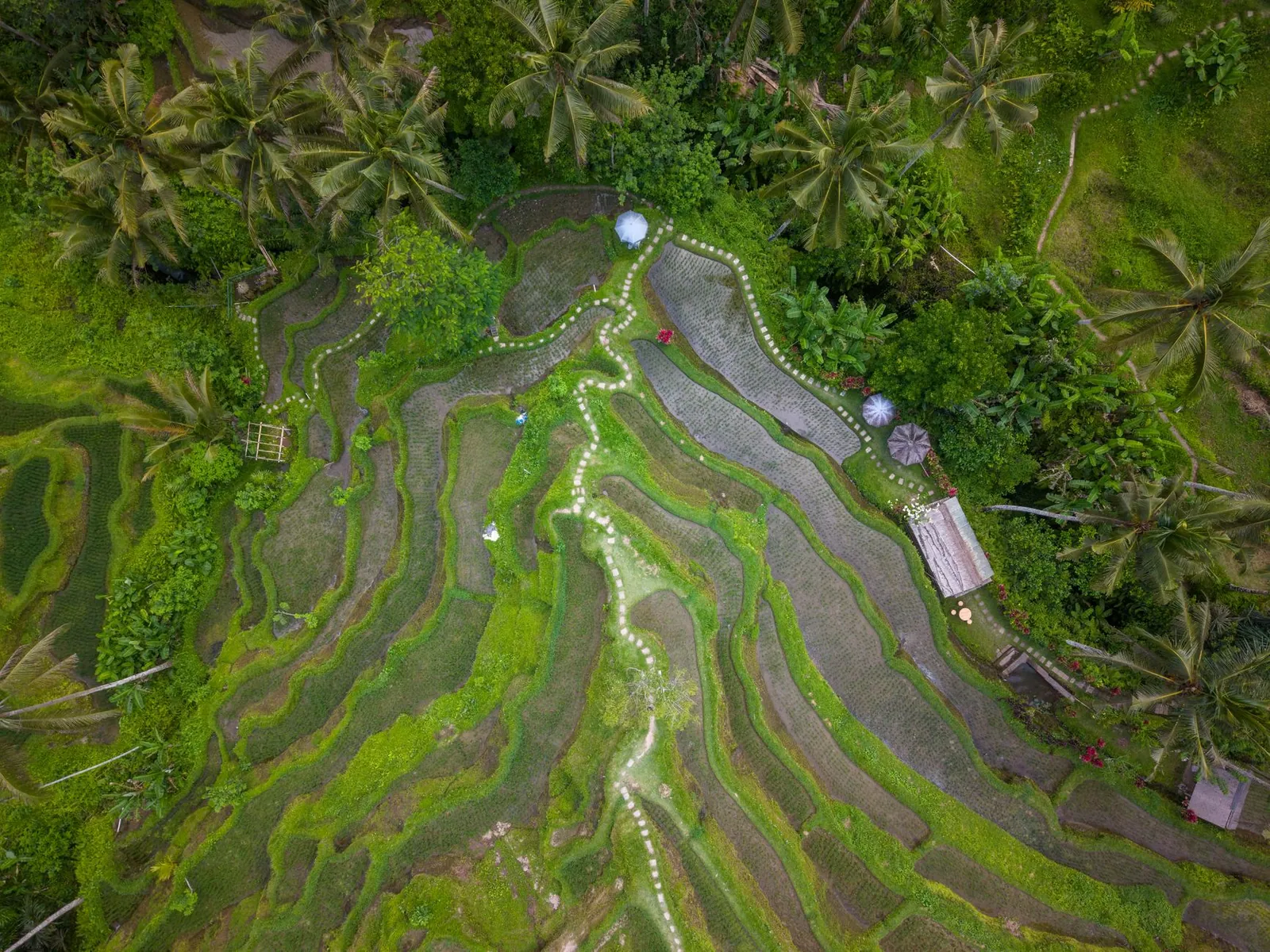
The island is greener. The rice terraces are at their most absurd. The crowds thin. And the prices fall a long way, which means the same money buys a noticeably better villa.
What is humid is both seasons. Australians consistently underestimate this. The difference between the seasons is rain, not humidity. Anyone expecting a dry heat is thinking of a different country.
Month by month
| Month | What you get |
|---|---|
| January | Wettest, cheapest, greenest. Afternoon storms, empty beaches, excellent villa value. |
| February | Much the same. Quiet, wet, good value. |
| March | Rain easing. Nyepi frequently falls here, which closes the airport for a day. |
| April | The wet season winding down and the crowds not yet arrived. Quietly one of the best months. |
| May | The pick. Dry weather arriving, crowds not, fares still sensible. |
| June | Excellent, and starting to fill. |
| July | Best weather, worst crowds, hardest fares. The Australian school holiday collision. |
| August | Busy, dry, windy on some coasts, and the peak of the peak. |
| September | The other pick. Dry, the crowds gone, fares softening. |
| October | Shoulder. Rain returning gradually, still largely pleasant, good value. |
| November | Wet season proper. Cheap, green, afternoon storms. |
| December | Wet, and then the Christmas fortnight arrives and the prices do not care about the rain. |
If you take one thing from that table: May and September. Both sit at the edges of the dry season with the weather of the peak and neither the crowds nor the fares of it.
Nyepi will stop your holiday
This is the fact that catches people out and it deserves its own section, because nothing else in travel works like it.
Nyepi is the Balinese day of silence. For roughly twenty-four hours the entire island stops. Nobody leaves their accommodation. No lights, no noise, no work, no travel. The beaches are empty. The streets are empty.
And the airport closes. Genuinely closes, for about a day. It is the only major international airport in the world that shuts for a religious observance.
If your dates land near it and you did not know, that is a serious problem: no flights in, no flights out, and no transfers. If you did know, it is one of the most extraordinary things you can witness, and the night before, with the ogoh-ogoh parades, is genuinely spectacular.
The date moves with the Balinese calendar and frequently falls in March. We check it before quoting, because it is precisely the sort of thing a comparison site has never heard of.
The school holiday collision
The other calendar that matters has nothing to do with Bali's weather.
July and the fortnight either side of Christmas are when Australia goes. Those weeks combine the best of the dry season with fixed school dates, and the result is that fares and rooms harden months out and do not soften.
If your dates are fixed in that window, four to five months of lead time is not caution, it is the difference between a wholesale fare and whatever is left. Our flights to Bali page covers the corridor.
If your dates are flexible, avoid those weeks entirely and the same holiday costs meaningfully less.
Which holiday are you having?
This is the question that actually decides the month, and it is not about weather.
Pool, villa, spa, dinner, a book. The wet season is genuinely good value and barely affected. An hour of rain in the afternoon while you are inside anyway costs you nothing, and you are in a better villa for the money.
Beach every day, snorkelling, island trips. Dry season. The water clarity and the boat reliability both matter, and the wet season takes both.
Surfing. Depends on the coast, which is the useful bit almost nobody knows. The west coast breaks work best in the dry season, roughly May to September, when the offshore winds line up. The east coast is better in the wet. So there is no bad surf season, only wrong pairings of coast and month.
Rice terraces, temples, Ubud, photography. The wet season, honestly. Everything is green and the light after a storm is extraordinary. The dry season browns off the landscape more than the brochures admit.
Nusa Penida and the boat trips. Dry season. The crossings are weather-dependent and the wet season cancels them.
Notice that each of those answers points at a different part of the island, which is why the villa decision follows the month rather than the other way around. Seminyak and Canggu for the beach-and-restaurants version, Ubud for the green interior and the rice terraces, the Bukit and Uluwatu for the clifftops and the surf, and Sanur or Nusa Dua for the calm-water family version. Villas price very differently across those areas in the same week, and in the wet season the gap widens further, which is exactly when the upgrade is worth taking. Compare Bali villas and hotels
One caveat on the wet season bargain: the cheapest properties are cheap for a reason in those months, and a villa without covered outdoor space is a very different holiday in February. Read the photographs for roofs, not for sunsets. Our Bali hotels shortlist sorts the areas properly, and our Bali travel guide covers the island itself.
What we tell clients
If you can move your dates: May or September. Every time. It is the closest thing to a free upgrade in travel.
If you have school-age children: you are going in July or at Christmas, so book early and stop shopping. The fare is what it is and lead time is your only lever.
If your holiday is a villa: genuinely consider the wet season. We book a lot of them and the feedback is consistently better than people expect.
If you are chasing perfect beach weather on a tight window: dry season, and accept the crowds.
If Nyepi is anywhere near your dates: talk to us first.
Our Bali travel guide covers the island itself and our things to do in Bali page covers what is worth booking ahead.
The booking rhythm
Peak weeks, July and Christmas: four to five months out.
Shoulder months: six to eight weeks is usually enough, and flexibility beats lead time. If you can move by a few days the fares reward it.
Wet season: the fares are soft and the properties are available. This is the one window where late booking is genuinely fine.
The one constant: the difference between the best month and the worst month for the same holiday is not the weather, it is what you paid and who else is there.
Get a free Bali quote with your dates checked and a consultant will tell you honestly whether your window is a scramble or a bargain, and whether Nyepi is about to close the airport on you.