
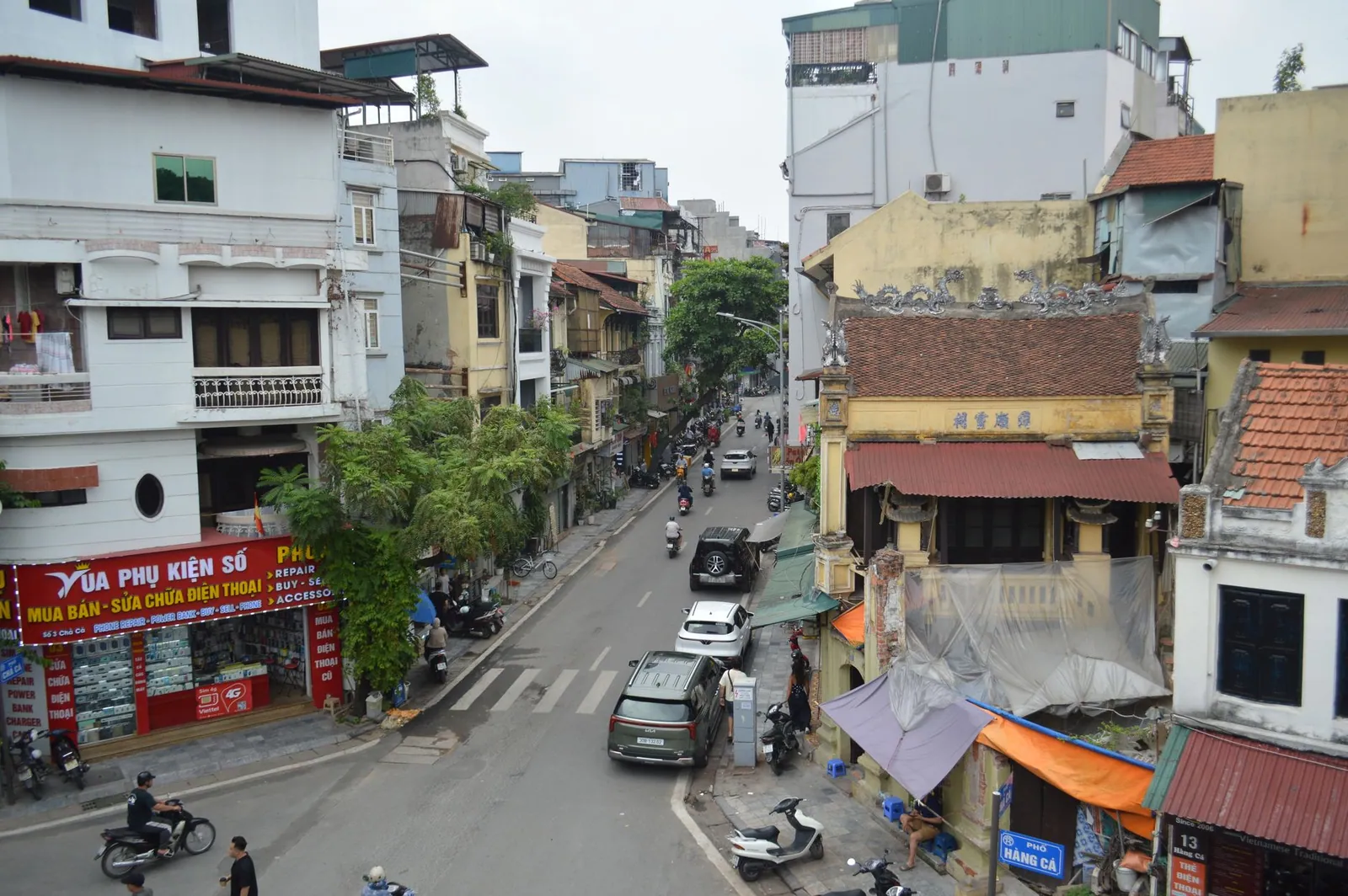
Best Hotels in Hanoi | Stay in the Old Quarter, Not Near It
Hanoi's Old Quarter is loud, and the temptation is to book somewhere quieter nearby. That is the wrong instinct: the noise is the city, and the alternative is a hotel with a view of a road.
The noise is the point
Here is the instinct almost every first-time visitor has, and it is wrong.
They read that the Old Quarter is loud. They book somewhere quieter nearby. And then they spend the trip commuting into the thing they flew here to see.
The Old Quarter is Hanoi. It is a thousand-year-old grid of trade streets still named for the crafts that occupy them: Hàng Bạc was silver, Hàng Mã was paper goods and still is, so an entire street glows with red and gold votive paper, Hàng Thiếc was tinsmiths and men are still hammering metal in doorways. It survived the war, the French, socialism and tourism, and it is genuinely medieval urbanism still functioning.
You do not visit the Old Quarter. You get lost in it, for three days, on purpose. That requires being in it at seven in the morning and eleven at night, not arriving at ten by taxi.
So: stay in it, and solve the noise a different way. Ask us about Vietnam.
How to actually solve the noise
Ask for a room off the street, at the back, or on a higher floor.
That is a completely normal request and every property in the Old Quarter handles it daily, because every guest asks. The good ones have quiet rooms and they know exactly which they are.
That is a better solution than moving suburb, and it costs nothing but the asking. We ask on your behalf as a matter of course.
The lake is the landmark
The most useful way to orient a Hanoi booking.
Hoan Kiem Lake sits between the Old Quarter and the French Quarter, and anything within a few streets of it puts you within walking distance of essentially everything worth walking to.
It is also where the city does tai chi at half past five in the morning: hundreds of people, badminton, aerobics, running, in the half-light. Our Hanoi travel guide calls it the most charming thing in the city and it is free.
Being close enough to wander down at dawn without committing to it is worth something real.
The areas
The Old Quarter. Where you should be. Dense, loud, ancient, walkable, and the whole reason for the trip.
The French Quarter. Handsome, calmer, more expensive, and ten minutes away on foot. It suits travellers who want the grand old colonial hotel experience, which is genuinely available here and genuinely lovely. For a first visit we would still put you in the Old Quarter and let you walk over for a drink.
Tay Ho, West Lake. Where a lot of expatriates live. Pleasant, leafy, and a ride from everything. Right on a second visit, wrong on a first.
Anywhere further out. No.
The heating question nobody asks
This is the most useful practical thing on this page and it catches Australians every winter.
Northern Vietnam has a real winter. From roughly December to February, Hanoi can be genuinely cold and damp, with a grey lid on the sky that does not lift for days. Not Melbourne cold, but cold enough that a person in a singlet is miserable.
Australians consistently arrive having packed for Bali, because South East Asia is filed in our heads as one climate. It is not, and our Hanoi guide opens with exactly this warning.
Now the hotel consequence: a great many buildings here were designed for the heat rather than the cold, and heating is not universal, particularly at the cheaper end and in older properties.
So if you are booking a winter trip, ask about heating before you book. It is a fair question, it is not a rude one, and it is the difference between a charming old room and a cold one.
Keep the room during Ha Long Bay
A practical trick that saves repacking.
If you are doing Ha Long Bay properly, which means an overnight on the boat rather than a day trip, many Hanoi hotels will store your main bag and hold or release your room while you go.
That is standard practice and worth asking rather than checking out and back in. You take a day bag to the bay and come back to the room you liked.
And to be clear about the bay itself, because our Hanoi guide argues it at length: take the overnight, not the day trip. The day trip is four hours of bus, four hours of bay, four hours of bus, in a convoy. The bay's best hours are early morning before the mist burns off and the evening after the day boats leave, and a day trip cannot deliver either.
The value at the boutique end
Hanoi does something unusual: the small, well-run property in a restored building is genuinely excellent here and costs a fraction of anything comparable at home.
The mid-range is good rather than merely acceptable, which is not true everywhere in the region. Service tends to be attentive in a way that is slightly formal and entirely genuine.
Which means, as in Kuala Lumpur, you can book better than you normally would without it hurting.
The seasons
October and November is the best window: dry, mild, clear. Rates are highest and worth it.
March and April is the second window, warming up, generally pleasant.
May to August is hot and extremely humid with serious rain, and it is the season most Australians book because it lines up with our winter.
December to February is the northern winter described above: cold, grey, damp, quiet, and cheaper. Some travellers love it. Nobody who packed for the tropics loves it.
Tet, the lunar new year, is its own event: rates rise, the city empties of workers, and a great deal closes for several days while families gather. It is fascinating to witness and frustrating to sightsee through, and the dates move with the lunar calendar.
The visa, before anything else
Not a hotel matter and the most important thing on any Vietnam page.
Australians generally need a visa arranged before you fly, most commonly the e-visa applied for online. Vietnam does not wave us through on arrival the way much of the region does, and the airline checks it at Sydney check-in.
Apply early, match the passport details exactly, and check the current rules on an official source. Our Sydney to Ho Chi Minh City page and flights to Vietnam page both repeat this, because it is worth repeating.
Rates are excellent value and the good small Old Quarter properties are genuinely small. Get a free Vietnam quote and a consultant will reply within 2 business hours with the flights priced, the open jaw into Hanoi and home from Saigon costed alongside the return, and your visa requirement checked before you pay for anything.
Booking notes
Prices shown by our partner are live and arrive in Australian dollars from our links, and free cancellation windows are stated on each listing. Our current hotel partner is Agoda. Hanoi is a city of small family-run hotels rather than big chains, and Agoda lists the Old Quarter properly, so the scores out of 10 from guests who completed the stay do most of the sorting for you.