
Best Hotels in Kochi and Kerala | Fort Kochi, Backwaters and Hills
Kerala is not a city trip with excursions attached. It is three or four different places that happen to share a state, and the right answer is almost never one hotel. It is a sequence of them.
Stop looking for one hotel
The most common Kerala mistake is treating it like a city break: book a hotel in Kochi, do day trips, fly home. It half works, and it wastes the state.
Kerala is really four places, and they are far enough apart and different enough from each other that the trip only makes sense as a sequence:
- Fort Kochi, the historic port quarter, for two nights
- The backwaters around Alappuzha or Kumarakom, for one or two
- The hills, Munnar or Thekkady, for two or three
- The coast, Varkala or Marari, for as long as you have left
Eight to ten nights covers it comfortably. Six does it in a hurry. And if you only have four, pick two of the four rather than trying to touch all of them, because the driving between them is the thing that eats short trips.
Fort Kochi: stay here
Fort Kochi is the answer for your city nights and it is not close.
It is the old port: Portuguese, Dutch and British layers stacked on top of each other, the Chinese fishing nets on the waterfront, a synagogue, a basilica, spice warehouses, art galleries, and streets you can actually walk. It is one of the few genuinely strollable historic quarters in India, and it is small enough to know within a day.
The homestays here are the story. Kerala does the converted-heritage-home thing better than anywhere in the country, and in Fort Kochi the family-run guesthouses in old merchant houses are frequently better than the hotels at the same money: courtyards, verandahs, breakfast cooked by someone who lives there. If you have never stayed in one, this is the place to start.
At the top end, Brunton Boatyard sits on the waterfront in a rebuilt colonial-era shipyard and is the classic address, and there are several excellent small heritage hotels nearby.
Ernakulam, across the water, is the working city: modern hotels, traffic, business. It makes sense for a late arrival or a work trip and for very little else. Our Kochi and Kerala travel guide covers what to do on each side. Compare Fort Kochi hotels
Houseboats, honestly
Here is the advice we give every Kerala client, and it is not what the brochures say.
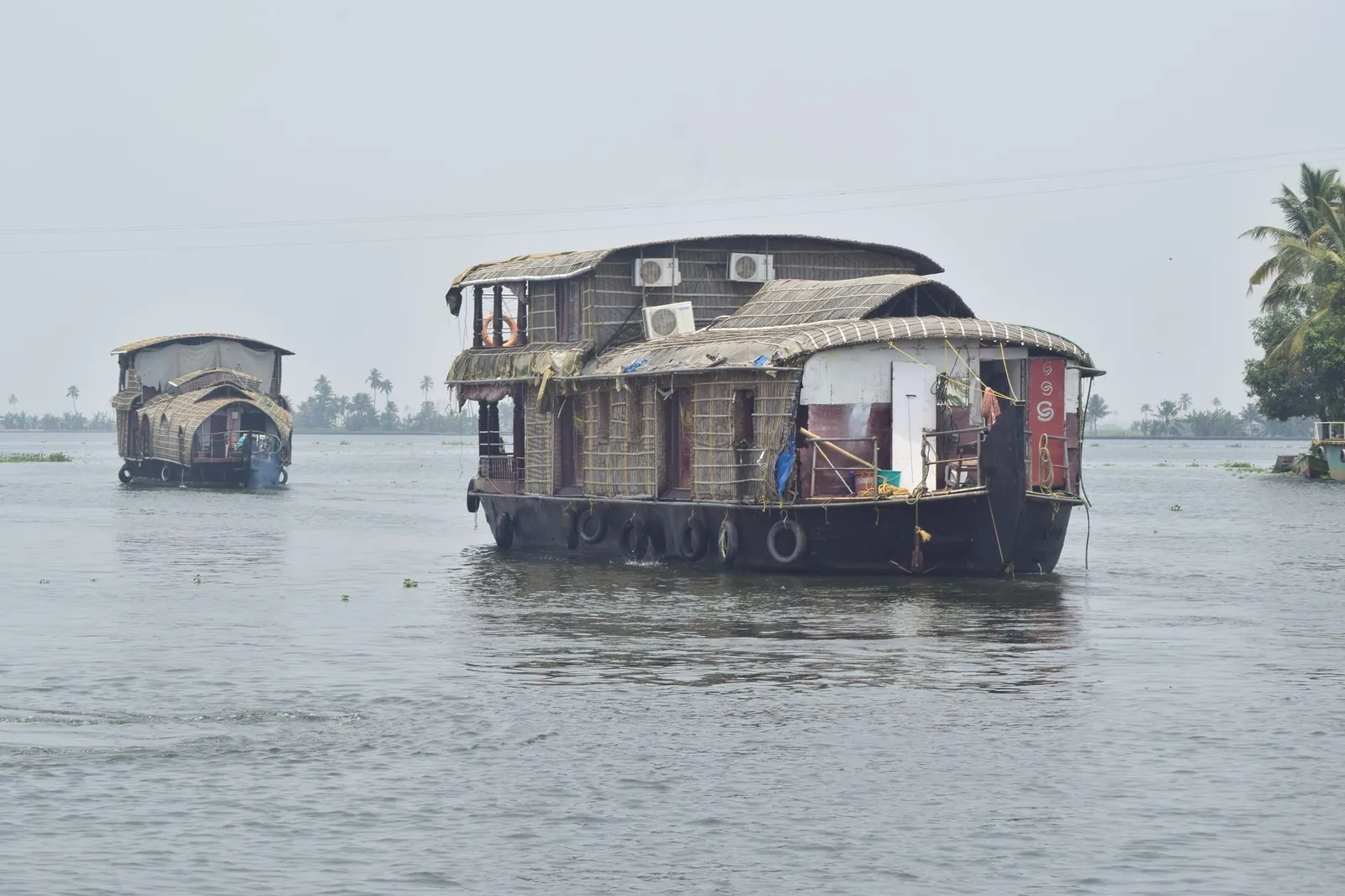
One night on a houseboat is lovely. Two is usually one too many. The first afternoon drifting through the backwaters, watching village life happen at walking pace from a deck chair, is genuinely one of the great slow pleasures in India. By the second day, most travellers have run out of backwater. There is a reason the one-night trip is the standard and it is not commercial.
Quality varies enormously, and the cheap boats are cheap for reasons. Engine noise, mediocre food, boats moored in a row with twenty others. The difference between a poor houseboat and a good one is far larger than the difference between a poor hotel and a good one, because on a boat you cannot leave.
The alternative nobody mentions: stay in a backwater resort or homestay at Kumarakom or Alappuzha, and take a day boat instead. You get the same water, better food, a proper bed and air conditioning that works, and you sleep somewhere that is not idling. For a lot of travellers, particularly families, this is simply the better version of the same idea. Compare backwater stays
The hills, which need two nights
Munnar and Thekkady are four hours or so from Kochi, up into tea country, and the drive is part of the trip rather than a chore.
This is not a day trip and treating it as one is the second-biggest Kerala mistake. You would spend eight hours in a car to see three hours of hills. Give it two nights minimum. The climate is genuinely different up there, cool enough for a jumper, and the tea estates in the morning mist are the photographs you came for.
The hotel stock ranges from plantation bungalows to modern resorts, and the plantation stays are the ones worth the money.
The coast, for the end
Varkala's cliffs and Marari's long empty beach are where the trip should finish, not start. After Kochi's streets, the backwaters' slowness and the hills' driving, four days of doing nothing on a beach is exactly right, and Kerala's coast is quieter and cheaper than Goa's.
Marari in particular suits families. Varkala suits everyone else.
The monsoon argument
Everybody tells you to visit Kerala between November and February. They are not wrong; that is the season, the weather is excellent and the rates are the highest of the year.
But Kerala in the monsoon is the recommendation we make most often to travellers with flexible dates, and it is worth taking seriously. The landscape is impossibly green, the crowds are simply not there, the rates are the softest of the year, and the traditional ayurveda season is timed to exactly these months for reasons that have nothing to do with tourism. The rain arrives, does its work with some drama, and leaves.
Our best time to visit India guide makes the fuller case, but the short version: if your leave falls in July and someone told you India is closed, they meant the north. Kerala is not closed. Kerala is arguably better.
Booking notes
Rates through our partner Agoda are live and shown in Australian dollars, and cancellation terms are stated per rate rather than buried. Kerala is a place where the good stays are small, and Agoda lists a great many of them: Fort Kochi heritage homes, backwater homestays and houseboat operators that never appear on the big international platforms. Scores run out of 10 and come from guests who completed the booking, eligible stays earn AgodaCash, and payment happens on the partner's side; we never see your card details.
The Kerala-specific advice: book the sequence, not the hotel. Four short stays in the right places beat one long stay in a good one, and the state simply does not reward a single base. And read houseboat reviews harder than you read hotel reviews, because that is where the quality gap is widest.
Kochi is reached from Australia with one stop, usually through Singapore or Kuala Lumpur, and fares here stay gentler than Delhi or Mumbai outside the December rush, which is a large part of why Kerala is such good value from here. Get your free Kochi fare quote, or start comparing Kerala stays while you plan the route.