
Manila Travel Guide | The Gateway Australians Underrate
Manila is the gateway to one of the great island countries and it is treated as an obstacle to be survived. Some of that is fair. But the terminal problem here has ruined more Philippine holidays than the traffic has, and both are avoidable if you know.
Read this before you book anything else
The Philippines is a country of more than seven thousand islands, and the flight from Australia lands in a megacity that is not one of the good ones.
That is fine. Manila is the door. What is not fine is the way most itineraries are built through it, because Manila's airport has a structural problem that a booking site will happily sell you straight into.
Everything else on this page is secondary to that, so it goes first. Ask us to check a Manila connection.
The terminals are separate buildings
Manila's airport has several terminals. They are not concourses connected by a walkway or a train. They are separate buildings with a road between them, and the road is in Manila.
So a "connection" from your international arrival to a domestic flight out to Palawan or Cebu can mean: clear immigration, collect your bags, leave the airport, travel by road to a different terminal in some of the world's most difficult traffic, and check in again from the beginning.
The consequences are exactly what you would expect. A two-hour connection is not a connection, it is a hope. A late international arrival means a forfeited domestic ticket, because it was bought separately and nobody owns the failure but you. And a person who has flown all night is the least equipped person imaginable to solve it.
Three ways we handle it. Where the fares allow, we ticket the domestic leg with the international one so the airline owns the connection and the bags stay checked through. Where they do not, we build serious buffer rather than the legal minimum. And frequently the honest answer is the third one: put a night in Manila, sleep, and take the island flight in the morning like a human being. Our flights to the Philippines page covers the corridor and the Sydney to Manila page goes through the routings.
The traffic is worse than you think
Australians who have survived Bangkok and Jakarta still arrive here unprepared.
Manila's traffic is in a category of its own, and the practical consequence is that distance stops being a useful measure. A journey that looks like twenty minutes on a map can take two hours at the wrong time of day, routinely, not exceptionally.
Which means the itinerary rule here is: one thing per day. Not three. Pick the thing, go at dawn, be back before the afternoon closes the roads. Visitors who plan a normal city day with four stops in it spend that day in a car being angry.
The other consequence is where you stay. Makati and Bonifacio Global City are comfortable, safe and full of good restaurants, and they are a long way from Intramuros. That is a decision, not a detail.
Intramuros is genuinely good
Now the part nobody expects.
Intramuros is the walled city the Spanish built, and the Philippines was a Spanish colony for well over three centuries, which is longer than the British held India and which explains almost everything about this country: the surnames, the churches, the food, the Catholicism.
The walls are real and you can walk on them. San Agustin Church is the oldest stone church in the country and survived the war that flattened almost everything else here, and its interior is startling. Fort Santiago holds the cell where the national hero José Rizal spent his last night, with his footsteps marked in brass across the ground to the execution site. Casa Manila is a reconstructed colonial house that shows you how the merchant class lived.
Do it early, on foot or in a bamboo bicycle-cart with a guide, before the heat. It is two or three hours and it is the best thing in the city.
The rest of Manila is a working metropolis. Binondo is the world's oldest Chinatown and is worth a food crawl. Rizal Park is the green lung. The National Museum complex is free and better than it needs to be. Bonifacio Global City is glass and lawns and could be Singapore.
Filipino food is the region's secret
Here is the thing that surprises everyone: Filipino food is not like the rest of South East Asia at all.
There is no chilli heat to speak of. What there is instead is sourness, and salt, and garlic, and vinegar, and a bluntness that people who love Thai food find bewildering for about two days and then cannot stop eating.
Adobo is the national dish and it is meat braised in vinegar, soy and garlic until it is dark and sharp. Every family's version is the correct one.
Sinigang is a sour soup, tamarind-based, and it is the dish that explains the cuisine: sourness as the point rather than an accent.
Lechon is a whole roast pig and the Philippines does it better than anywhere. This is not a controversial statement.
Kare-kare is oxtail in peanut sauce with a fermented shrimp paste on the side that you add yourself.
Halo-halo is a dessert that appears to be a mistake: shaved ice, evaporated milk, beans, jelly, purple yam, a scoop of ice cream, and it is genuinely wonderful.
Manila's restaurant scene has spent the last decade taking this food seriously, and it is the best place in the country to be taught it. A guided food crawl through Binondo is the single best paid experience in this city.
Manila is a door, and the country is behind it
Two days here, at most, and then go.
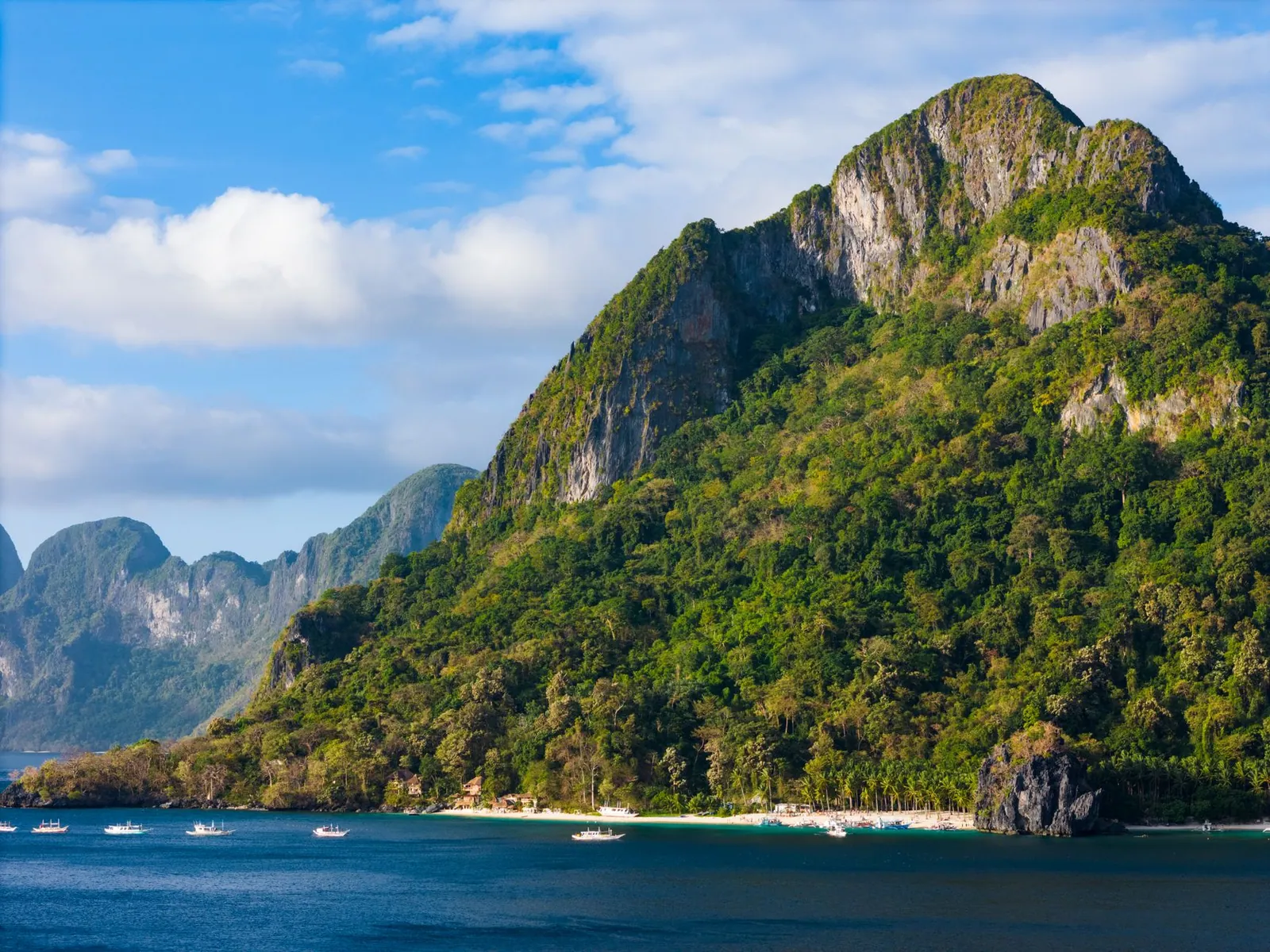
Palawan is the reason. El Nido and Coron are limestone karst, lagoons and water that is genuinely the colour it is in the photographs, and it is one of the most beautiful places on earth. The catch is that it is not close: a flight from Manila, and then boats.
Siargao for surfing and for the traveller scene.
Bohol for the Chocolate Hills and the tarsiers, which are the smallest primates you will ever see and which should not be handled regardless of what anybody offers.
Cebu as a second hub and a base for the south.
Banaue and the rice terraces in the north, which are two thousand years old and carved into mountains, and which almost no Australian visits because they involve a long overnight bus.
The mistake, and we see it constantly, is trying to fit three of these into one trip. This is an archipelago. Everything is a flight or a boat from everything else, and the flights go via Manila, which brings you back to the terminal problem. Pick one region. Do it properly. Come back for the next one.
The seasons, and the typhoons
December to May is the dry season. January to March is the best of it: dry, less humid, before the heat builds in April and May.
June to November is the wet season and it is also typhoon season, and that is a genuine planning consideration rather than a disclaimer. Typhoons cancel domestic flights and stop boats, which matters enormously in a country where boats are the transport. If you travel in that window, build slack into the itinerary and treat travel insurance as the point rather than the paperwork.
The islands are also weather-dependent in a way that Manila is not. A wet week in Manila is an inconvenience. A wet week in El Nido, where the boat trips are the holiday, is a different problem.
Practical bits
Onward tickets are checked. Airlines enforce the requirement to hold a return or onward ticket at check-in, and it is a common reason people are refused boarding. Have it ready.
English is everywhere. Widely and genuinely spoken, which makes this one of the easier countries in the region for a first Asian trip.
Filipino hospitality is real. It is the thing travellers report back on more than anything else, and it is not the performed kind.
Cash matters outside the cities. The islands run on it far more than Manila does.
Book the first night from the night before. Flights from Australia land at various hours and the difference between a room waiting and a lobby at 5am is the difference between a good first day and a wasted one. Get a free Philippines quote.