
Sydney to Manila Flights | Non-Stops, Boxes and Balikbayans
Sydney to Manila is one of the great community corridors of Australian aviation, balikbayan homecomings, the world's longest Christmas season, and a rising tide of travellers discovering that the islands beyond Manila hold some of the most beautiful water on earth. Two non-stops contest it, and the connections beyond decide most trips.
Full price in AUD with baggage and meals included | Reply within 2 business hours | No obligation
Airlines we book on this route
We quote every full-service option and tell you honestly which is the best value for your dates. We do not publish fares because they change daily and the sharpest prices are unpublished wholesale fares. Ask us for today's best price.
| Airline | Typical routing | Good to know |
|---|---|---|
| Philippine Airlines | Non-stop | The flag carrier's home run, generous baggage patterns built for the balikbayan economy and the domestic island network behind it. |
| Qantas | Non-stop | The oneworld alternative with familiar service and points earn where Sydney households collect them. |
| Cathay Pacific | Via Hong Kong | The quality one-stop, excellent cabins and useful depth when the Christmas crush consumes the non-stops. |
| Singapore Airlines | Via Singapore | The southern one-stop, longer geometry but Changi comfort and keen fares in the quiet months. |
A corridor built on homecomings
No route we sell carries more emotional freight per seat. Sydney's Filipino community is one of the city's largest migrant communities, and this corridor is its umbilical: Christmas homecomings booked around the world's longest festive season, Holy Week reunions, fiestas in provinces the airlines have never heard of but the domestic network reaches, and the balikbayan boxes, taped, labelled and loved, that carry a year of remembering home. Booking this route well means understanding what it is actually for, which is why our first questions are about the province, the occasion and the luggage before they are ever about the fare.
The practical translation: December is a project, booked by August, because the diaspora flies as one and late seats price accordingly. Holy Week is the second immovable peak, its dates shifting each cycle and its flights filling with the same reliability. Allowances are currency: on a corridor where the luggage is the point, the generous-baggage patterns beat nominally cheaper fares almost every time, and we compare them in that order. Tell us the real trip and the booking shapes itself around it.
The non-stops, and when the hubs beat them
Philippine Airlines flies this corridor the way only a flag carrier can: the non-stop into its own fortress hub, baggage policies that treat the box economy as the institution it is, and the entire domestic archipelago waiting on the same ticket. For homecoming travellers continuing to the provinces, it is usually the natural answer, and its wholesale allocations keep the fares honest. Qantas counters with the familiar: oneworld points and status earn, domestic feed from around Australia, and service that suits the leisure stream. Between them the non-stops carry most of the corridor.
The hubs earn their place twice a year and for two kinds of traveller: Cathay Pacific via Hong Kong adds premium-quality capacity when December consumes the non-stops, and its cabins make it the comfort pick for travellers who want the journey broken; Singapore Airlines via Changi offers the southern geometry with keen quiet-month fares and the stopover option for two-city trips. As everywhere, the sharpest fare rotates weekly with allocations, and pricing the field costs one quote.
Beyond Manila: the islands are the second half of the ticket
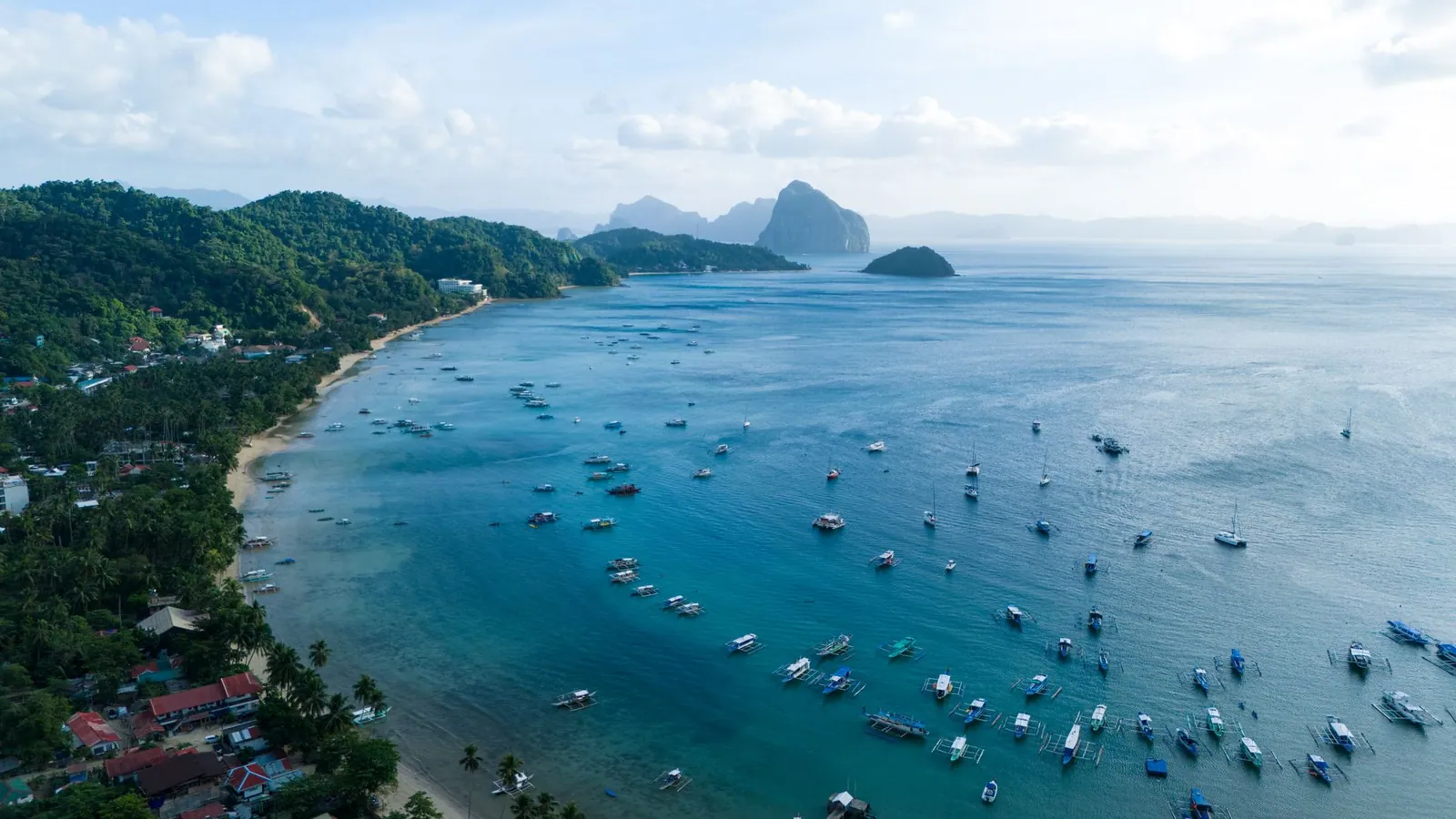
For a growing stream of Sydney travellers, Manila is the doorway to the archipelago's astonishing water: Palawan's El Nido and Coron, limestone karsts over glass-clear lagoons; Boracay's rehabilitated white beach; Cebu and Bohol for whale sharks, chocolate hills and island-hopping; Siargao for the surf. Every one of them rides domestic connections that should ticket with the international journey, protected and baggage-through, because peak-season inter-island flights run full and self-assembled connections gamble with thin margins. Some patterns route via Cebu directly, worth asking about when the Visayas are the destination. The construction craft is identical to every archipelago we sell: one booking to the final beach, honest connection padding through Manila's terminals, and the transfer between them planned rather than discovered.
Family travellers combine both halves constantly, the provincial homecoming plus three days of El Nido with the cousins, and the whole shape prices best as one itinerary with an open-jaw where it saves backtracking.
Season logic for the archipelago
December to February is the sweet spot twice over: the Christmas homecoming season and the dry, cooler amihan weather across the islands. March to May is summer, hot, dry and beach-perfect, with Holy Week the travel spike inside it. June to November is the wet season and typhoon belt, which deserves honest words rather than avoidance: rain comes in bursts, the surf turns on, prices soften deeply, and the risk is not daily rain but the occasional typhoon that reshuffles flights, which is precisely when full-service tickets and an agent who answers the phone prove their worth. Travellers with flexible dates get the archipelago at its calmest prices in these months; travellers with fixed island plans should prefer the dry season and book the inter-island legs with margin either way.
NAIA, decoded for the returning and the new
Manila's Ninoy Aquino International runs multiple terminals whose assignments shift with the airlines, and the transfer between them is the corridor's one genuine logistics trap: an international arrival at one terminal connecting to a domestic departure at another needs honest time, a plan for the shuttle or taxi hop, and luggage patience, all of which we build into itineraries rather than leaving to the arrivals-hall learning curve. The rest of the arrival is smoother than the airport's old reputation: e-gates and eTravel registration (completed online before flying, which we brief with every booking) have modernised immigration, and the pre-arranged pickup rule applies with Manila traffic squarely in mind, because the distance from the airport to Quezon City is measured in hours, not kilometres, at the wrong time of day.
Two homecoming-specific notes. Provincial connections late at night sometimes make an airport-adjacent hotel and a morning flight the kinder plan than a midnight domestic sprint, a suggestion families accept gratefully once someone makes it. And the return leg's check-in deserves margin: the box economy means the bag-drop queues on this corridor run longer than the aircraft type suggests, and arriving at the airport with time to spare is the cheapest stress reduction we can prescribe. None of this is complicated; it is just the difference between flying the corridor and knowing it.
Booking tips for this route
- August for December. The Christmas corridor rewards the organised and punishes everyone else, every single year.
- Allowances are the real fare. Boxes and gifts decide this corridor's economics; we compare baggage before headlines.
- One ticket to the final island. Domestic legs belong inside the booking, protected, especially in peak season.
- Holy Week moves; check it. The dates shift each cycle and the demand does not.
- Wet season is a deal with terms. Deep value, real typhoon contingency; take it knowingly with tickets that rebook properly.
Fares move daily and price individually: request your free Sydney to Manila quote and a consultant who books this corridor weekly replies within 2 business hours with the non-stops and the hubs priced side by side, island legs included, in Australian dollars with baggage in writing.