
Sydney to Kuala Lumpur Flights | The Hub That Is Also a Holiday
Most people who fly Sydney to Kuala Lumpur are not going to Kuala Lumpur. They are going through it, which makes this the most misunderstood route on the site: the destination question and the hub question have completely different answers.
Full price in AUD with baggage and meals included | Reply within 2 business hours | No obligation
Airlines we book on this route
We quote every full-service option and tell you honestly which is the best value for your dates. We do not publish fares because they change daily and the sharpest prices are unpublished wholesale fares. Ask us for today's best price.
| Airline | Typical routing | Good to know |
|---|---|---|
| Malaysia Airlines | Non-stop | The incumbent, and the reason KL matters. Frequently the sharpest fare to India and beyond, and Oneworld so Qantas status works. |
| Qantas | Non-stop | The Australian option and the one that keeps status credits at home. Has served the route in recent years. |
| Singapore Airlines | Via Singapore | A stop to reach a place with non-stops, which needs a reason. Occasionally the fare is the reason. |
Two completely different questions
Almost everyone who books Sydney to Kuala Lumpur is answering one of two questions, and they have nothing to do with each other.
"I want to go to Kuala Lumpur." Fine. It is the best-value major city in South East Asia and two days does it properly.
"I want to go to Delhi, or Kochi, or London, and KL came up in the search." Also fine, and a completely different booking, because now KL is a hub and the thing that matters is what happens after it.
A comparison site cannot tell which one you are. We ask, because the answer changes everything: the fare class, the connection buffer, the terminal, and whether we should be pricing a stopover instead. Tell us where you are really going.
If KL is the hub: why it wins so often
This is the part worth understanding, because Kuala Lumpur turns up in our India quotes more than any hub except Singapore, and it is usually the cheapest.
Two reasons.
Geography. KL sits between Australia and India rather than west of it. Fly Sydney to KL to Chennai and you are pointed roughly at your destination the whole way. Compare that to Dubai or Doha, which sit west of India, so a Gulf routing overshoots your destination and doubles back. Our Qatar Airways page is candid about that.
Commercial position. Malaysia Airlines competes against Singapore Airlines an hour down the road, which has one of the strongest brands in aviation, and against the Gulf carriers with their enormous marketing budgets. An airline in that position has one lever and it pulls it: the fare is the pitch.
Put those together and you get a sensible routing at a sharp price, which is an unusual combination.
And the fact almost no Australian knows: Malaysia Airlines is in Oneworld. Your Qantas status works on it, lounge access and all, and the flights earn Qantas points and status credits. So you can take the cheapest option on the corridor and still be looked after as the frequent flyer you are.
The two-terminal trap
This is the practical warning and it is a real one.
Kuala Lumpur's airport has two terminals in separate buildings joined by a train. Malaysia Airlines and the other full-service carriers use the main one. The low-cost carriers largely use the other.
The train works fine. The problem is separate tickets. If a cheap search sells you a Malaysia Airlines long-haul plus a low-cost onward flight on a different booking, your "connection" is: clear immigration, collect the bags, take the train, check in from scratch, queue through security again. That is a serious amount of time performed by a tired person, and if the first flight is late, the second ticket simply evaporates.
Two fixes, and we build both. Ticket the whole journey together where the fares allow, so the airline owns the connection and the bags stay checked through. Where they do not, build real buffer rather than the legal minimum.
If KL is the destination: two days is enough
And they are good days. Our Kuala Lumpur travel guide makes the case properly, and the short version is that KL is Singapore's food at a third of the price with a fraction of the polish, which suits more travellers than admit it.
The Batu Caves are the best half-day and one of the easiest day trips in Asia: a commuter train from the central station, half an hour, and you arrive at an enormous limestone outcrop with a giant golden statue and a very long painted staircase up to a cave temple. Go early. The monkeys are thieves.
The food is the argument. Three complete cuisines, Malay, Chinese and Indian, cooking side by side and borrowing from each other, plus the Nyonya cooking that came out of the marriages between two of them. Nasi lemak for breakfast. Roti canai at a mamak stall at three in the morning. Banana leaf rice for lunch.
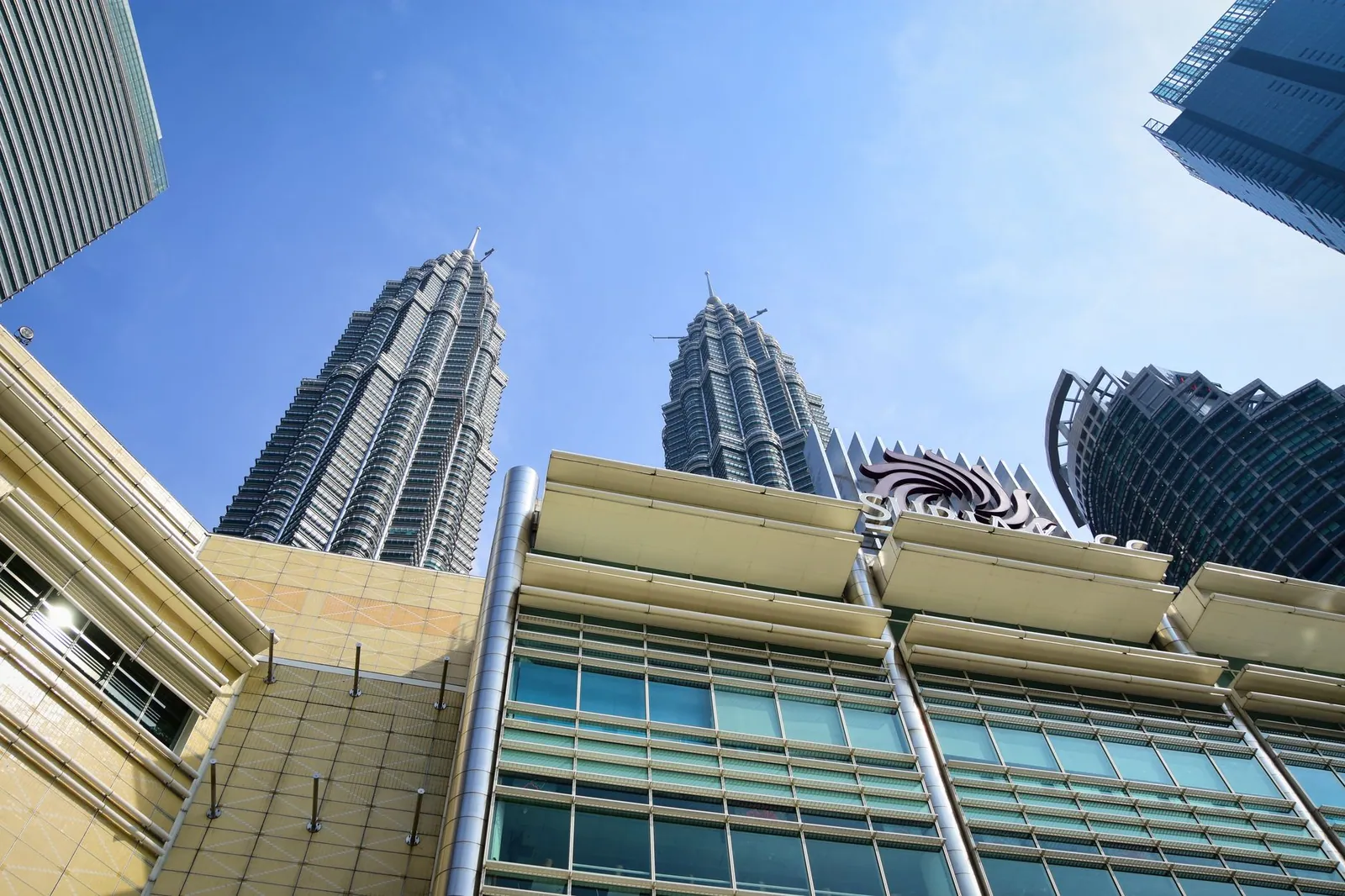
The Petronas Towers are worth going up once with timed tickets booked ahead, and the better view is from a rooftop bar looking at them.
Anything beyond three days here should probably be spent elsewhere in Malaysia: Penang for the food and shophouses, Langkawi for a beach, or Borneo, which is a different country in every sense that matters.
The stopover, which is close to free
Here is the construction that ties both halves of this page together.
If you are already changing planes at KL on the way to India or Europe, staying two nights costs little or nothing extra on a through fare. You get a proper hotel, a shower, a Batu Caves morning and a mamak stall at midnight, and you break a very long journey into two civil ones.
Booking sites are structurally bad at this because they price an origin and a destination while you are trying to shape a trip. Ask for it in the quote notes and we will price it alongside the straight-through fare so the difference is a number rather than a hunch.
The cabin question, honestly
Eight and a half hours sits right on the line, and our is business class worth it guide draws it at around seven.
Northbound is usually a daytime run, so the flat bed buys comfort rather than time. Southbound is more often the overnight, where it changes your next day. If you buy one, buy the one coming home.
The more interesting answer on this route: if KL is your hub to somewhere long, put the premium cabin on the sector after KL, not before it. That is the leg you want to arrive at rested, and it is frequently cheaper to do it that way round.
Weather, which is the same every day
There is no season here in any useful sense. KL sits near the equator and it is hot and humid every day of the year, with rain arriving as an intense afternoon downpour rather than a grey day.
March to April and September to November are somewhat wetter. It matters less than you would think, because the pattern is the same: a hot morning, a dramatic burst of rain, a pleasant evening. Plan indoor afternoons, which is what the whole city does.
The practical consequence: KL is one of the few destinations where you can book on price rather than season, which is a rare and underrated luxury. Our flights to Malaysia page covers the corridor.
Booking tips for this route
- Say where you are really going. Hub and destination are different bookings.
- One ticket through KL. The two-terminal transfer is not a corridor.
- Use your Qantas status. Malaysia Airlines is Oneworld and almost nobody knows.
- Ask for the stopover. If you are connecting anyway, two nights is close to free.
- Put the premium cabin after KL, not before it, if you are going somewhere long.
- Book on price, not season. The weather is the same every month.
Fares move daily and price individually: request your free Sydney to Kuala Lumpur quote and a consultant replies within 2 business hours with the fares in Australian dollars, plus the through-fare and stopover versions if your trip continues onward.