
Best Hotels in Kathmandu | Thamel Is for Outfitting, Not Sleeping
Every first-time visitor books Thamel and half of them wish they had not. It is where you buy a sleeping bag, not where you should sleep, and the alternative is twenty minutes away and considerably lovelier.
Thamel is a shop, not a suburb
Every first-time visitor to Nepal books Thamel. Half of them wish they had not.
Here is what Thamel actually is: the traveller district. Trekking gear, agencies, restaurants, bars, touts, noise. It exists to sell you a sleeping bag and a permit and a bus ticket, and it does that superbly.
It is useful. It is not beautiful, and it is not quiet.
So the rule: stay in Thamel for one or two nights if you are outfitting a trek, because everything you need is within two streets and that convenience is real. If you are not trekking, sleep somewhere else. Ask us to shape a Nepal trip.
Patan is the answer
Across the river, effectively part of the urban area now, and twenty minutes from Thamel.
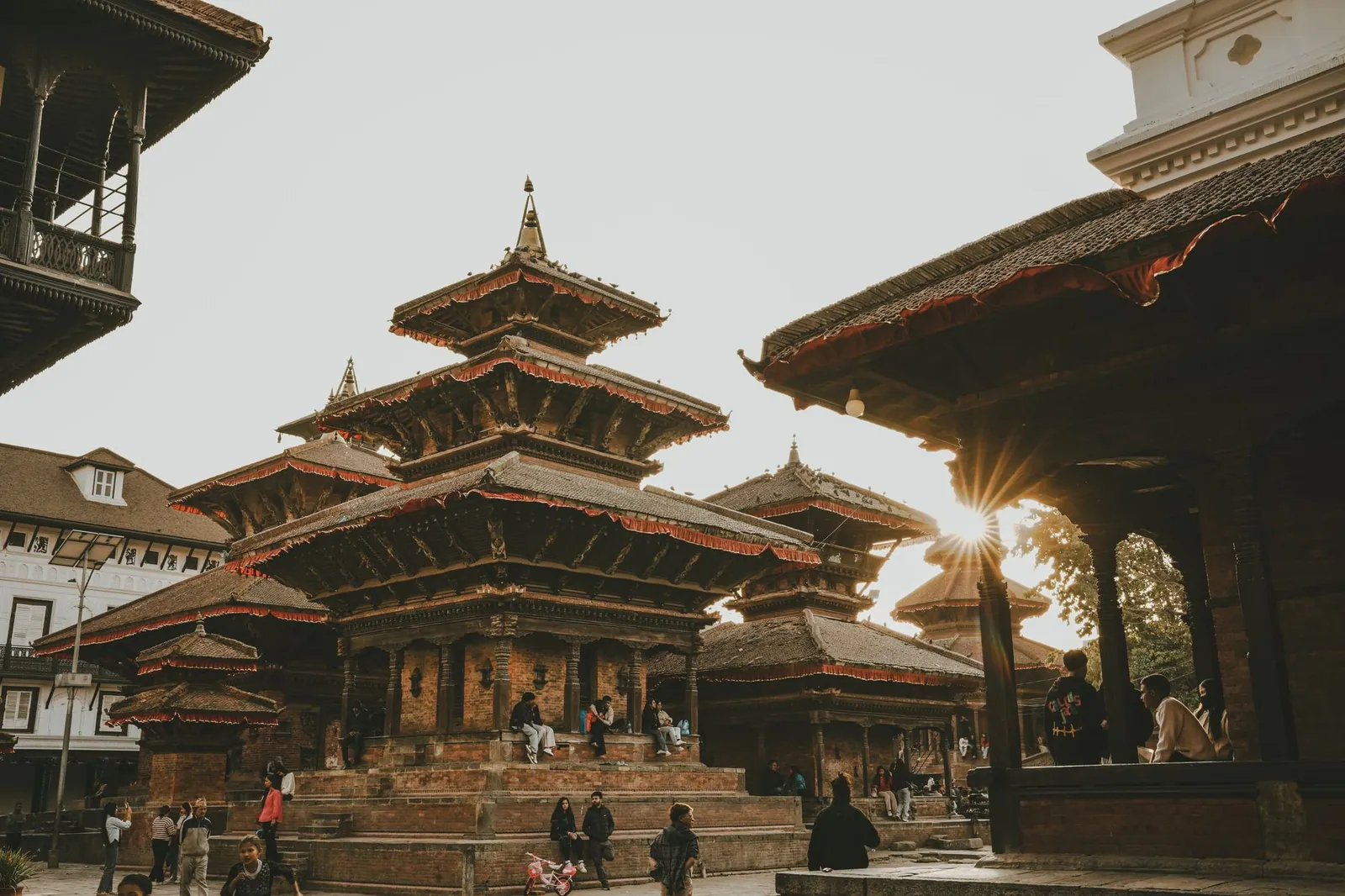
Patan has the densest and arguably loveliest Durbar Square of the valley's three royal cities, a superb museum in an old palace, and a courtyard-based old town where you can be genuinely lost and genuinely calm at the same time. There are excellent small hotels in converted Newari buildings, and the value at that end is remarkable: a beautiful room in a four-hundred-year-old courtyard for what a mid-range chain costs at home.
Our Kathmandu travel guide argues that the valley is better than the city, and where you sleep is the easiest way to act on that.
And Bhaktapur is the one nobody books
If you can, stay a night here, and almost nobody does.
Bhaktapur is the best preserved of the three cities, largely traffic-free inside the old walls, and it is a functioning medieval town rather than a preserved one: potters working in the pottery square, woodcarving that is genuinely the finest in Nepal, a five-tiered pagoda that will stop you where you stand.
The day visitors arrive at ten and leave at four. The town after they go is an experience most people never have, and one night there is worth more than three in Thamel.
The trekking rules that decide your hotel
Two facts, and they are the most useful things on this page if the mountains are why you came.
Rule one: your hotel stores the excess bag, and that is completely standard.
The flight to Lukla, the airstrip for the Everest region, allows around 10kg plus a small carry-on. Your international ticket to Kathmandu allowed 30kg or more, particularly in a premium cabin. So almost every trekker arrives with far too much.
The fix is not to pack differently. It is that your Kathmandu hotel stores the excess while you are on the mountain, at no real cost and with no fuss, because they do it every day of the season. Book knowing you will split the bag rather than discovering it at the domestic terminal at six in the morning.
Rule two: never fly to Lukla the day you arrive.
Mountain flights are weather-dependent in a way Australians have no reference point for. They are cancelled and delayed regularly, sometimes for days, and the backlog compounds. That is normal rather than a failure.
So you need at least one night in Kathmandu before the mountain flight, and several buffer days between coming off the trail and your international flight home. Which means the Kathmandu hotel is not a formality; it is structural, and it may be needed for longer than you planned.
Book somewhere you would not mind being stuck for two extra days. That single criterion is worth more than any star rating.
The dust
This is the Kathmandu-specific thing that affects the booking, and nobody mentions it.
In the dry season the air quality is genuinely poor. Not unpleasant: poor, in a way that gets into your room and your throat.
Which means a hotel with a courtyard, a garden, or some separation from a main road is worth considerably more here than in most cities. That is not a luxury consideration, it is a comfort one, and it is why the converted Newari properties in Patan and Bhaktapur, which are built around interior courtyards by design, are so much pleasanter than a room on a Thamel street.
Ask about it. We do.
What else to ask before booking
Hot water, particularly in winter and at the cheaper end. Solar hot water is common, which means it depends on the day. The better properties manage it and it is a fair question rather than a rude one.
Heating, in December to February. Kathmandu is properly cold in winter and a great many buildings are not heated in the way Australians assume every building is.
The road. A quiet lane versus a main road is a bigger difference here than the room itself.
Airport transfer. Arrange it before you fly rather than negotiating at the kerb, which is true everywhere and truer here.
Three nights, and one outside the city
The shape we recommend: three nights minimum, and at least one of them out of central Kathmandu.
One night in Thamel if you are outfitting. Two in Patan. Or one in Bhaktapur if you can arrange it, which is the version we would book for ourselves.
And then the mountain, or the valley, or the hill towns: Nagarkot on the valley rim or Dhulikhel give you a Himalayan dawn without a trek, and both are an easy drive with genuinely good small hotels.
You cannot see Everest from Kathmandu, incidentally, and people are disappointed by this weekly. The city sits in a bowl with hills around it. Our Kathmandu guide covers what you can see and the mountain flight that shows you the rest.
The seasons
October and November is the season: post-monsoon air, the clearest mountain views of the year, and every hotel full. Book early.
March to May is the second season: warmer, hazier, rhododendrons in flower.
June to September is the monsoon. Cheap, green, and the mountains are behind cloud.
December to February is cold and often beautifully clear, with the friendliest rates, and the heating question above becomes the important one.
Rates are reasonable and the good small properties in Patan and Bhaktapur are genuinely small, which means they fill in a way a city hotel does not. Get a free Nepal quote and a consultant will reply within 2 business hours with the flights priced and the mountain-flight buffer built in rather than assumed. Our flights to Nepal page and Sydney to Kathmandu page cover the corridor.
Booking notes
Prices shown by our partner are live and quoted in Australian dollars from our links, and free cancellation windows are stated on each listing. Our current hotel partner is Agoda, which lists Nepal thoroughly: the Thamel guesthouses and Boudha courtyard hotels appear alongside the heritage properties, and its scores out of 10 come only from guests who completed the stay, which is a useful filter in a city where standards vary street by street.